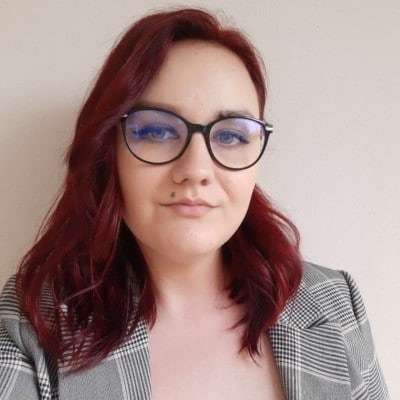
In this episode of Mastering CS: Candid Leader Insights, Irina Cismas talks with Justin Camarata, Principal Customer Success Manager at Invoca, a platform that helps revenue teams learn from their customer calls. Justin manages a small book of large strategic enterprise accounts, where a single customer can span multiple business units and dozens of stakeholders.
He explains how he keeps everyone aligned on why the customer bought, how he researches a company’s priorities before the relationship even starts, and why trust is built by showing up often and in person. He also covers adoption milestones, how to prove ROI in executive business reviews, the AI workflows that free up his time for relationship building, and the running advice that shapes how he approaches every new account.
What You’ll Learn
- How to keep dozens of enterprise stakeholders aligned on why they bought your product
- How to research a customer’s business priorities using earnings reports and public materials
- Why trust and in-person relationships are the foundation of enterprise CS
- How to drive adoption with 30, 60, and 90 day milestones
- How to prove ROI in executive business reviews without pitching a roadmap
- Practical AI use cases for data analysis, deck creation, and weekly engagement summaries
Key Insights & Takeaways
The CSM is the alignment conduit. In large enterprises, the CSM’s job is to make sure every stakeholder understands why the product was bought and how it ties back to company goals.
Do your homework before the kickoff. Earnings statements, investor materials, leadership changes, and marketing shifts reveal what the customer cares about and give you a north star for the relationship.
Know why they chose you. Understand why the customer bought now, instead of a competitor, no solution, or an in-house build.
Conflicting stakeholder goals trace back to the top. When objectives differ, tie them back to what the company is focusing on at the highest level.
Trust is built by showing up. Be consistent, do what you say, and meet stakeholders in person when you can. AI will never replace that human relationship.
Adoption needs milestones and measurement. Agree on 30, 60, and 90 day goals early, then keep measuring results against what the customer said they bought for.
Podcast transcript
Irina (0:06 – 0:28)
Welcome to Mastering CS: Candid Leader Insights, the podcast where we dive into the world of customer success with industry leaders. I’m your host, Irina Cismas, and today I’m joined by Justin Camarata, Principal Customer Success Manager at Invoca, a platform that helps revenue teams learn from their customer calls. Justin, I’m really happy to have you here! Thanks for joining!
Thanks for joining!
Justin (0:28 – 0:30)
Thank you for having me! I’m happy to be here as well.
Irina (0:31 – 0:42)
Let’s start from the very beginning. What does your day-to-day look like, and who are you working with inside the accounts that you are managing? Who are your internal customers?
A Day in the Life of a Principal CSM
Justin (0:43 – 1:26)
Yeah, thank you. I am a Principal Customer Success Manager at Invoca, and I’m managing a book of a few larger strategic enterprise-level relationships. So my day-to-day is everything from driving implementation to alignment with a large group of key stakeholders in a number of different contexts.
With one of my larger customers, we work across four different business units, so we have an executive sponsor that oversees those, as well as a program team. We have some technical contacts, as well as the people in charge of overseeing the day-to-day business process. So in a given week, I would say I’m talking to anywhere from 10 to 30 different people within the customer. It just depends on what we’re trying to do that week.
Keeping Every Stakeholder Rowing in the Same Direction
Irina (1:27 – 1:34)
And right now, what’s the one thing you are trying to move the most? What’s your main priority?
Justin (1:34 – 2:49)
The main thing, especially when you’re dealing with a large enterprise customer, and this is a customer that sometimes spends literally billions of dollars every single quarter, with thousands or tens of thousands of employees, is that it’s very hard to ensure that everybody is rowing in the same direction and that they all understand why they bought the product and what they’re hoping to get out of it. So one of the things I see as really key for a customer success manager is being that conduit: the person that helps connect why the customer bought it, why they care about what happens, why we all should be working towards the same things, and how we can ensure we’re driving results aligned with what leadership cares about and with what the customer actually cares about.
Throughout my career, I’ve had everything from large enterprise customers to very small ones, what some people call SMB or mid-market customers. And there are certainly some challenges with both, but it’s about making sure that every single person understands why we bought this, why we care about this, and how this traces back to our goals. The CSM has a lot of influence and a lot of power when they do that correctly.
So making sure that everybody is rowing in the same direction is both a challenging part of the job and a very rewarding part of the job.
Handling Conflicting Stakeholder Objectives
Irina (2:53 – 3:15)
I want to ask you something, because you mentioned that you manage different stakeholders, and one of the things you are focused on is alignment. Does it happen that different internal stakeholders have objectives that don’t go in the same direction? And how do you make sure that you serve both?
Justin (3:16 – 5:03)
Yeah, that’s a good question. One of the things I like to do early in a new customer relationship is my own deep dive and assessment of what the company is trying to do. If you’re working with a publicly traded company, this is pretty easy. You can look at their earnings statements. You can look at the publicly available materials they release for investors and for the public. You can see what they’re focusing on every single quarter.
So I look at that at a high level and then try to understand how my solution, my platform, whatever it is you’re working with, serves that broader goal. And then, within that, who are the stakeholders and who are the buyers? And why did they choose to buy this solution right now, as opposed to a competitor, no solution, or building something in-house?
If you have a good understanding of what the customer cares about and why they’re trying to use your product in particular at this moment in time, that really gives a north star to all of your operations. And then yes, you may have a stakeholder with a different set of objectives, but you should always be able to drive it back to what is happening at the high level of the company.
So again, pointing back to my current portfolio: a very large enterprise-level customer in the telecommunications space. I am tasked with being the subject matter expert on that company and knowing what is happening. What are their leadership changes? What are they focusing on in a given quarter? Why would we want to be aware of one executive departing and another one coming in? If they’re changing their marketing strategy, why are they changing it? Who is their new target customer? These are the kinds of things I think CSMs should know and should be spending time thinking about, so that they can tailor their delivery with that in mind and ensure customers are receiving value in a way that’s aligned to what they care about.
Building Trust Early in the Relationship
Irina (5:05 – 5:38)
In real life, what you just described is easy to say, harder to do. So I’m curious, how do you get those answers? Because in some cases, when you are working with different internal stakeholders, it’s very hard for them to articulate why exactly they bought and what it means for them. How do you get to the real value and what it does for them? What’s your process for doing that?
Justin (5:39 – 7:07)
Yeah, I think for me, starting a relationship with trust is really important. They have to see that you are consistent, that you’re going to do what you say you’re going to do, that you understand what they actually care about or are making an attempt to, and that you will be the person that actually tries to deliver in line with that. And in the early days, that means showing up a lot.
In my opinion, you have to reach out. If you’re local to the customer’s market, go see them in person. I’m sure we’ll talk about AI coming up here, but this is something AI is never going to be able to do: that human relationship. Take people out for a happy hour, a cup of coffee, or lunch. Actually get to know them, get to know what they’re working on, and get to know how your solution fits into that process in the first place.
In my experience, the best CSMs, the ones I’ve followed and tried to emulate, have all done a really good job of getting in early and building trust and credibility with those key stakeholders. And obviously things can change with your customer. Your customer could reorganize. Your key champions could leave. What the company is focused on can shift on a day-to-day basis, especially with a large publicly traded company.
But positioning yourself as somebody who is committed to the relationship, committed to helping them drive value, and committed to helping them actually see a return on investment on what they’ve spent on your platform is going to be key to getting that done. And you need to position yourself that way early and very often.
Driving Adoption with Milestones
Irina (7:10 – 7:50)
I want to move past the initial setup. So let’s assume we onboarded the customer and we managed to establish the foundation on which we’re going to build the whole CS relationship. How do you drive adoption? How do you make sure that, inside the organization, the product you sold is actually used and is bringing value? Especially when you are talking about a big enterprise customer.
Justin (7:51 – 9:54)
Yep. There are a few different ways I like to think about this. There’s actually measuring the results as you are able to, and then there are also adoption milestones. I’ve used an adoption milestone framework, so we look at things like: in your first 30, 60, 90 days, here’s what we’re hoping to get done. Here’s a list of things we’re driving towards that we align on at the beginning of the relationship.
And then there’s ongoing measurement of how the platform is performing for the customer. That’s something I think every CSM needs to get into the habit of doing often. You need to be looking at things like: if they stated they’re buying this for marketing attribution, what does the data say we are actually helping them drive and measure? That’s something we work on at Invoca quite a bit. We’re constantly asking: what ROI do we drive for the marketing team here, or for anybody else in the organization? Can we show what we’ve helped deliver for you?
One of the ways we’ve done that internally is with Asana. We work with Asana and other programs like it to track milestones, due dates, and deliverables. Certainly there’s ongoing task management, but it’s about being able to drive and align towards what we know are the key value milestones at different points in time. So at 60 days, have they completed all their partner integrations? At 90 days, have they gone live with tracking on the new webpages or the mobile app? Things of that nature.
And again, you have to be regular with these customers, especially the large ones. You cannot simply send an email and say, “Hey, just checking in, hope things are going well.” You have to get your hooks in very closely and spend time with them often. I’m of the opinion that with large enterprise stakeholders, you should be talking to them multiple times a week. That way, you can report back to them: here’s what we’re doing, here’s what I owe you, here’s what you owe me. And you can drive and row together.
The good CSMs have that relationship focus, but they also have to be someone who drives an outcome. So making sure you’re aligned on what those outcomes are supposed to be, and that you’re aligning your workflows and your day towards them, goes a long way.
Proving ROI to Executives
Irina (9:55 – 10:10)
At some point, someone senior asks what the platform is actually returning. How do you answer that? And when do you start building the case? Or, if the adoption process was done correctly, do you not reach that question?
Justin (10:11 – 12:02)
I think ideally, if adoption is done correctly, yes, it should be very clear to the customer. But in a lot of cases, you do need to start showing that return on investment early. And I think the executive business review process is absolutely critical to overall customer health.
And I realize, saying this as a principal CSM, that a vice president of CS, or whoever the executive sponsor of the relationship is, doesn’t want to sit there and hear a product roadmap they didn’t ask for. They want to hear how you are driving towards the things they care about and how you directly contributed to that.
So there are always platform metrics you can deliver, and that’s great. But I think the bigger way of showing value is to show, throughout: here’s how we’ve understood your objectives. Here’s how our solution meets you in driving towards those objectives. Here are the things we’ve done: deliverable X, deliverable Y, the milestone we hit over here to help you get there. You recap that and show the results that came from it. And then you ask: okay, for the next quarter or the next six months, are we aligned on what should happen? Here’s what I believe should happen, based on what I understand, what we’ve done so far, and what we know are the wins and the opportunities. Now, do I have your buy-in to pursue this next stage of the relationship?
Again, there are a lot of CSMs I’ve followed and emulated throughout my career. And I think the best ones have almost uniformly known deeply what their customers care about and been able to tie what they’re driving towards back to that. It’s always messy, and every individual customer and situation is going to be a little bit different. So I don’t want to claim that every solution is going to be the same, but having that overarching framework really goes a long way.
How AI Fits into Daily CS Work
Irina (12:04 – 12:12)
Let’s tackle the subject of AI as well. Where has it landed in your own work as a customer, as a principal customer success?
Justin (12:13 – 13:42)
Yeah, I use it often. I use Claude pretty much daily for multiple processes. One of my favorite things to do with it is customer data analysis, honestly. We use Tableau, other products like it, and our own internal platform metrics, but I love being able to export a large data set, drop it right into Claude as a CSV, and say: help me make sense of these numbers over this time period, here’s what I’m trying to do.
I regularly use it for deck creation. CSMs spend a lot of time presenting slideshows and decks, and I can’t tell you how many hours I have saved with Claude by dropping in my content and my outline and making sure it follows company branding and everything else. It has been an absolute game changer.
But as I said earlier, what I think is transformative about AI for what we are doing is that it frees up capacity so we can invest more in relationship building and in getting closer to what the customer is actually looking for. I’ve heard a lot of fear, understandably, that CS is going to be replaced by AI or that the need for it is going to go down. And there’s probably some truth to that, honestly. But I think if you’re using it correctly, it frees up capacity to actually invest in the relationships more.
So we are constantly looking at that. We have internal AI sprints. In fact, I have a workshop later today specifically for my vertical on how we can automate different processes. So we’ve really tried to make it central to how we do business.
AI Upskilling and Automations at Invoca
Irina (13:43 – 14:02)
Are those workshops and AI learning facilitated from inside the company? Is it something the company provides so that the CS team levels up their AI skills? Or is it something you do on your own?
Justin (14:03 – 15:41)
It’s both. Invoca has done a really good job investing in AI readiness for all employees. It’s actually part of our individual KPIs. And as a team: can we show how we used AI to automate a process or improve an outcome of some kind?
We also use Gumloop, which is kind of a connector. I know a lot more people are starting to use it. I’m sure if somebody at Gumloop heard me say that, they’d say, no, you’re oversimplifying. Apologies to any Gumloop folks listening, but that’s been a great tool too. Certainly also tools like Gong and Salesforce, and being able to tie all of those together.
One of my favorite automations is a Friday morning summary of all my customer engagements throughout the week. I wrote something in Claude that looks at Gong, Salesforce, my calendar, and everything else, and provides a comprehensive summary of how we engaged with these customers during the week and how that tied back to the goals they’ve stated. That helps me do a recap of the week on Friday mornings, provide updates to my leadership, and tie it back to what we’re focused on as well as what the customer is focused on.
This is a process I used to do manually every single week. I still have to look at it, make sure it’s telling the story we want it to tell, and update some details as needed. But it can really amplify your best strengths, as long as you’re using it with that framework in mind. If a process can be automated, it should be automated. Your job as a CSM, the thing you are there for and that AI will never be able to do, is to lean into those customer relationships, build trust and credibility, and be the person who drives results.
Managing a Smaller Book of Enterprise Accounts
Irina (15:43 – 16:23)
In previous companies, you had a bigger book of business. Now it’s smaller. I’m curious if the playbook and the way you manage it now are different than they used to be. What changes exactly when you are managing a portfolio of five customers versus 20 or 30 enterprise customers? So, to compare apples to apples: big enterprise customers, but a smaller final number. Does that change the playbook you implement from a CS perspective in any way?
Justin (16:24 – 18:29)
Yes and no. In some ways no, because you still need to apply the same framework to how you engage with the customer. Lincoln Murphy is a longtime customer success guy, and I really like something he said, which is basically that you as a CSM should position yourself as an expert in their business and a strategic value partner for their business. That means knowing the business. It also means knowing how the customer is going to engage with you and what the relationship is.
In the days when I was managing a book of 15 or 20 customers, versus a smaller one now, there were still elements of that which were true. I still needed to understand: this is why they bought us. This is where we fit into their overall goals as a company. This is the organization within that company that bought us and how they’re using us now. Here’s how I can best be positioned to them. There are still key metrics and milestones we want to hit with them. You still want to drive those business reviews. You still want to multi-thread within the relationship, grow your network, talk to more people there, and deliver those value conversations.
For larger enterprise companies, where you have a smaller book and maybe more ARR you’re responsible for, I think in some ways the framework is still the same. You’re just engaging with it in an entirely different way. With one of my larger customers, I’m local in their market, so I can go get lunch, a cup of coffee, or a beer after work with them. That part of the relationship is a little bit harder to scale when you have a larger book. It can certainly happen with some key customers, your larger ones, but with a smaller focus, you’re still driving the same outcomes, just with a slightly different focus.
I would also say that with a smaller book, in the age of AI, we have more chances than ever to automate some of those processes and figure out ways to actually scale the business. I feel for every CSM managing a digital book with hundreds of customers. That is a difficult motion, but I think there are things to learn from them about how we scale, how we save time, and how we drive results even for a larger group of people.
Why Your First Mile Should Be Your Slowest
Irina (18:30 – 18:39)
The last question, is there a habit, a way of thinking or something you learned the hard way early on in your career that still shows up in how you run accounts today?
Justin (18:41 – 19:59)
I was thinking about this ahead of our conversation. I like to run recreationally, and a bit of advice I got from a coach once was that your first mile should always be your slowest mile.
I’ve thought about that a lot in my personal and professional life, because sometimes my tendency is to go out hot, go out strong, and get moving right away, really fast. And I think that can be good, but sometimes the thing to do is to go slow: to gather your energy, to listen, to get familiar with what’s actually happening, to move slowly so you can go faster later on.
I think that’s really important for CS too. We still need to establish our credibility early on, what the milestones are going to be, and how we’re going to drive value. But we also need to take those early days to listen and understand: this is what they need. This is what they’re facing as a business right now. This is why they chose us at this moment in time, not our competitor, not no solution, not building something in-house. They chose us for this reason, and this is what they care about. It’s my job to help deliver on that, show results, and drive value.
So the first mile always being the slowest means, to me, intentionally slowing yourself down: listening, being prepared, gathering your energy, listening more than you speak, and then being able to go faster as you build that time and credibility. I hope that helps.
Irina (19:59 – 20:17)
For sure it does. Thank you very much for a really interesting conversation! To everyone listening, thanks for tuning in.
Until next time, stay curious, keep learning and mastering customer success.