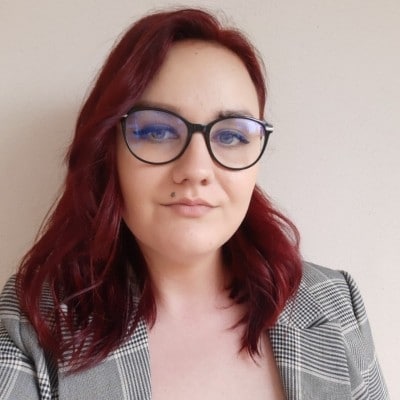
In this episode of Mastering CS: Candid Leader Insights, Irina Cismas sits down with Frances Dupree, Principal Customer Success Manager at Agiloft, a contract management platform for legal teams. Frances spent years inside legal operations before moving to the vendor side, and that experience of being the customer gives her a perspective that shapes everything about how she shows up for her accounts.
She shares what it was like to be on the receiving end of both great and poor CS, what good onboarding looks like when you manage 30 customers across multiple industries, how she uses AI to free up her attention during calls, and why overcommunicating is the one habit she has carried from every role she has held.
What You’ll Learn
- What Agiloft does and what the Principal CSM role looks like across multiple industries
- What Frances learned from being the customer that she now brings to every account
- What made one CSM exceptional and what she would change about the assignment process
- What good onboarding looks like and how the handoff from implementation to CS actually works
- What gets hesitant users from resistance to adoption when the software is live
Key Insights & Takeaways
Being on the buying side is the best preparation for CS. Having lived the pressure of deadlines, stakeholder presentations, and the frustration of something breaking right before go-live gives Frances instant credibility with her customers.
Every CSM has a superpower, and not every CSM fits every account. A better evaluation process for CSM assignments would prevent a lot of early relationship damage.
Good onboarding is good communication. Knowing your team, having cadence calls, sending recap emails, and making sure the customer never feels alone in the process is what sets up a successful partnership.
Show the time savings, not the features. Getting someone to adopt a new tool after 20 years of doing things their way requires showing them what they gain, not just what’s available.
Podcast Transcript
Intro
Irina (0:07 – 0:40)
Welcome to Mastering CS Candid Leader Insights, the podcast where we dive into the world of customer success with industry leaders. I’m your host, Irina Cismas, and today I’m joined by Frances Dupree, Principal Customer Success Manager at Agiloft, a contract management platform for legal teams. Frances, I’m really happy to have you here.
Thanks for joining!
You spent years inside legal operations, and now you are Principal CSM. What does your day-to-day actually look like, and who are your customers?
Frances (0:42 – 1:34)
So, due to confidentiality reasons, I’m not able to go into specific names, but I do serve the legal operations industry. We provide services to several industries, whether that’s education, it’s medical, we have a very wide range of industries we service. As far as my day-to-day is concerned, my goal essentially is to partner with my customers, not necessarily be a Principal Customer Success Manager, but be a partner to them to make sure that they’re meeting their goals, that they are able to prepare the proper use cases that they need for their stakeholders to show why Agiloft is such a benefit for them.
So, even though my title is Principal Customer Success Manager, I prefer to be more of a business partner, because their success is my goal as well as theirs.
Irina (1:36 – 1:40)
And right now, what’s the one thing you are trying to move the most?
Frances (1:43 – 2:05)
I would say the thing that I’m trying to move the most is one of our new features, which is AI. So, we do have Asterisk Screens, we have Prompt Lab, we also have batch migration, and we have the AI Assistant. So, I think that would be one of the things that we talk about a lot is the AI features that we currently have.
What Made a Great CSM and What She Would Change
Irina (2:06 – 2:32)
Super. I’m going to go deeper into the AI part later on, but before we do that, I want to ask you one thing. Before joining Agiloft, you were the one buying these platforms and using them every day.
So, what made the CSM genuinely useful to you, and what did you wish they had done differently?
Frances (2:33 – 4:00)
So, prior to coming to Agiloft, I was a Legal Operations Associate, and I implemented an e-billing system from the ground up, and I had an amazing Customer Success Manager. When I say amazing, I mean I would send her emails, it didn’t matter the time, she made sure that she responded. She was very responsive on our calls, and she made sure that we properly understood whatever questions, whatever blockers, anything that we needed.
The CSM made sure that we had everything we needed. She made sure that we were properly prepared. She provided access to her calendar, so if we needed additional time and additional meetings before we officially went live, after go-live, any type of training, if we had new users.
So, I really appreciate the Customer Success Manager that we had. Her name was Cecilia, and she works for BrightFly, so she was absolutely amazing. What would I say differently?
Prior to having Cecilia, we were assigned a different CSM, and he was not necessarily a good fit for our team. So, I think what I would personally suggest is more of an in-depth evaluation when it comes down to assigning a CSM to accounts, because every CSM has a superpower, and they all work great for certain teams, and then for certain teams, they may not necessarily be a good fit. So, I think a better evaluation of that would be my suggestion.
What Good Onboarding Looks Like at Agiloft
Irina (4:01 – 4:17)
Super, and now, speaking of this and the assignment of the CSM, this usually goes into the onboarding phase, and this is where I’m going to start the conversation with you. What does good onboarding look like at Angeloft, and how do you know when you’ve got there?
Frances (4:18 – 4:20)
As far as the customer is concerned?
Irina (4:21 – 4:30)
Yes. What does it mean, good onboarding for the customer, and also for you? What do you make sure it happens so that onboarding is successful?
Frances (4:31 – 5:35)
So, I try to get involved with the customer as soon as possible, so that way I know during the implementation what their goals are, and the things that they’ve accomplished during their implementation. I feel like good onboarding is good communication, knowing who your team is and who you’re going to be working with. I’m very hands-on and very communicative, so when I have my calls, I send recap emails.
I always make myself available, making sure that we have cadence calls so they know that they’re not on this journey by themselves, but knowing that they have support, and we are here to help them every step of the way, and sometimes things happen. There might be an issue with something that was set up or something that was connected, and just knowing that they don’t have to figure it out by themselves. I help when it comes down to escalating their cases, and I advocate a lot for my customers.
So, I feel like the best onboarding is knowing your team and knowing your community, and knowing that we’re here to help you to your success.
How Implementation Hands Off to CS
Irina (5:36 – 5:55)
And what are the KPIs that you guys are measuring? And I need to understand: is onboarding overlapping with implementation, or is it a separate phase? After the sales ends, the client goes into implementation, and then it is handed over to the CS?
Frances (5:55 – 6:36)
Yes, that’s the process. Once they sign, they go into implementation. That’s a separate team.
And then once implementation is done, one thing that I appreciate is we have a handoff call, so the implementer, myself, the account manager, and the customer, we have a conversation to let them know implementation is finishing up. This is the team that’s going to start working with you from here. So, we’re very hands-on with our customers.
We make sure that they know every step of the process, where they’re going next, who they’re going to reach out to and communicate with. So, again, like I said, they’re not in this process by themselves, but we’re right along with them.
Getting Hesitant Users to Actually Adopt the Software
Irina (6:37 – 6:56)
And once they are live, people have to actually use it. What gets someone from being hesitant to actually using it? What needs to happen so that the software that you just deployed is absorbed into your client’s day-to-day operations?
Frances (6:58 – 7:45)
I would say use cases and showing the benefits, showing the customer’s colleagues the benefit and the time savings of using the system. Sometimes people have been in an industry or in a position for 20-plus years, and they’re used to their way. They’re like, I do this thing my way, for example, let’s just say an NDA.
I review this NDA this way. It’s worked for me for the past 10 years. I don’t want to do anything new.
But when you utilize the Agiloft, you utilize the AI that we offer, the Astra, and you realize versus spending that time that you were using to review that one NDA, you can have it done in seconds. That’s a reason and a time saver. And it’s also a benefit for you to use the system versus doing it the way you’ve been doing it for years.
How Frances Uses AI in Her Own CS Work
Irina (7:47 – 7:58)
I want to bring in the conversation, the AI piece. Where has AI landed in your own work as a CSM? What did you try?
How do you leverage it?
Frances (7:59 – 9:15)
So I use AI when it comes to recording our calls. As I mentioned, I like to send recap emails. And when I’m on calls, I want to focus on my customer.
I want them to have my undivided attention versus having my head down and having to take notes. So being able to go back, utilize that recording, utilize chat or cloud and send that detail email back. It also helps me know what my next steps may be that I need to take as far as the customer is concerned, help them with things that they may need, escalate whatever may be needed.
And then also when I come in the morning, like today, it’s a Monday morning, I need to know what’s the priority for this morning. What emails did I forget to that I need to respond to and I don’t want to forget to respond to what calls do I have coming up and I want to make sure that I’m properly prepared for it. So AI helps in all of those scenarios.
We do quarterly business reviews because we want our customers to see the value in the system. It’s a reason that you purchase Agiloft. So from the time you purchase Agiloft to the time that you’ve been utilizing Agiloft, how far have you grown?
How much do you need to grow even more? How do we partner with you to help you get to your goal?
The Operational Infrastructure and Culture Behind CS at Agiloft
Irina (9:17 – 9:32)
And what is the operational infrastructure behind all of this? What platforms are central to how CS actually runs day to day? What do you need in order to be able to serve your own customers properly?
Frances (9:34 – 11:57)
I would say the team that I have, my supervisor is amazing. Her supervisor is amazing. My colleagues, I’m still new to the position and to the company.
I’ve been here since June. My supervisor is very supportive; she’s an advocate for our team. She’s very hands-on.
She’ll hop on a call with me. We’ll share a screen if I can’t find something. She’ll make sure if I have a question, she’ll go find the answer if she doesn’t already have it.
My team, my colleagues that are on my team have been very hands-on as far as my training’s concerned. I can ask questions. We can hop on a call.
We can talk through it. I wasn’t just throwing customers in here, figure it out. I was provided with my customers.
I was briefed on each customer properly. I met with the previous PCSM. They provided me with the information.
I worked very closely with the account managers. So I can honestly say, as far as Agiloft is concerned, my success is due to the culture that I have and the training and the colleagues that I work with. I feel like we all genuinely agree that the success of each and every one of us is the success of all of us.
Our common goal is for our customers to be successful. So if there’s something that I know my colleague doesn’t know, I’m willing to share it and vice versa. So I contribute my success with my customers to that and also to the fact of I just came from legal operations.
I was just on the other side of the table working with a customer success manager. I know how it felt to have a deadline that I need to meet. Pushing to go live, but there’s some, I don’t know, something broke or something wasn’t connected right and I need to meet this deadline.
Or trying to sell the use case as to why did we purchase the system anyways? What time are we saving? What is the benefit of having this system?
So I feel like having that hands-on experience on being on the other side of the table gives me an advantage when it comes down to my position because I know what to look for. I know it was a customer call that I had last week and he was talking about meeting with the stakeholders and I’m like, okay, so we should partner with you so we can help you with the use cases. What are the workflows that you’re using right now?
I know the language of the legal operators because I was just a legal operator myself.
What Made the Difference in Frances’s Own Employee Onboarding
Irina (11:59 – 12:24)
It sounds like you had an amazing onboarding from a company perspective as an employee. What was the key secret ingredient that made the difference in everything that you experienced? What did you feel like made a difference versus any other onboarding that you’ve been going through from an employee perspective?
Frances (12:25 – 12:57)
I’d say the open door to my supervisor and my colleagues. Being able to ask questions anytime and not feeling like, ” Oh, I’m new, so I can’t ask a question.” It’s such a welcoming environment.
So if I got stuck or I didn’t understand anything, I didn’t have to hesitate. I easily asked a question, and the answer was provided to me, and not only was the answer provided to me, but it was explained to me because there’s always a why. So the why was explained to me, and I feel that was very important.
The Habit That Has Carried Frances Through Every Role
Irina (12:59 – 13:13)
You’ve been a paralegal, a contract manager, legal ops, and now you are on the vendor side. Is there a habit, a way of thinking, or something you learned the hard way early on that still shows up in how you run accounts today?
Frances (13:16 – 13:59)
I think that my habit would be overly communicating. I want everyone to know what’s going on at all times. So as I mentioned, those recap emails are very important because sometimes you have conversations and I have, at the moment, I have 30 customers.
So you can forget something, but being able to go back and reference that communication, it helps and it also keeps everybody accountable. So it lets you know where you’re at in the process. The customer knows what’s expected of them.
I know what’s expected of me. My colleagues know what’s expected of them. So we all know where we left off at and where we need to pick up for the next step.
Irina (14:01 – 14:05)
Frances, this was a really interesting conversation. Thanks again for joining me!
Frances (14:07 – 14:19)
Thank you so much for having me! I’ve enjoyed being able to share my legal operations to principal customer success manager experience and journey, and I’m excited for what’s next ahead.
Irina (14:20 – 14:27)
To everyone listening, thanks for tuning in. Until next time, stay curious, keep learning, and mastering customer success.