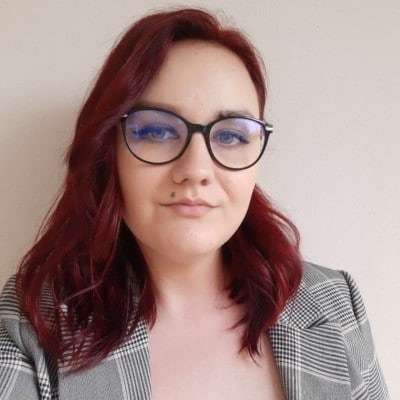
In this episode of Mastering CS: Candid Leader Insights, Irina Cismas talks with Michael Kehoe, Head of Customer Experience and Business Operations at Rec Technologies, a recreation operations platform for parks and recreation departments and private recreation clubs. As Rec’s first employee, Michael built the CS system before he hired his team, and today he leads deployments, customer success, and support.
He explains how he defines account health through referrals, how to drive adoption when AI speeds up feature releases, and why customers need a full spectrum of training formats, from bite-sized content to an embedded AI agent.
What You’ll Learn
- How to build a CS system before you hire a team
- Why referrals can be the clearest sign of account health
- How to drive adoption when features ship faster than ever
- How to mix self-serve, live, and one-to-one training
- How to keep a CS team focused on what moves the business
Key Insights & Takeaways
Build the system first. Account ownership, health, and communications should be tracked from day one, so new hires plug into a process.
Rank accounts by more than revenue. A small first client in a new metro can be worth more through referrals.
Referrals reveal true health. A healthy account will praise you to a prospect without you on the call.
Fast releases can feel chaotic. Segment users by role so each persona only hears about what matters to them.
Keep self-serve content bite-sized. Customers rarely finish long courses, so aim for under two minutes.
Offer every format. Let customers choose between self-serve, office hours, and dedicated support.
Podcast transcript
Irina (0:07 – 0:27)
Welcome to Mastering CS: Candid Leader Insights, the podcast where we dive into the world of customer success with industry leaders. I’m your host, Irina Cismas, and today I’m joined by Michael Kehoe, Head of Customer Experience and Business Operations at Rec Technologies, a platform for park and recreation agencies. Michael, I’m really happy to have you here. Thanks for joining.
Michael (0:28 – 0:31)
Yeah, I’m really happy to be here. Thanks for inviting me to speak.
Irina (0:32 – 0:39)
Let’s start with the very beginning. Paint us a picture of your world at Rec. Who are your customers, and what does the work actually look like day to day?
Inside Rec and the Recreation Operations Platform
Michael (0:40 – 2:59)
Yeah, so at Rec, we have what we call a recreation operations platform, or operating system. We basically provide all of the online workflows for anyone who provides recreation services. In the United States, that’s primarily parks and recreation departments. Every city in the United States has a parks department that provides a range of services, everything from renting a picnic table for your kid’s birthday party at the park to taking swim lessons. A lot of Americans will also be familiar with going to summer camp through their town program.
So that’s the parks and recreation department. And we are now going well beyond that, into private recreation: your local golf course or tennis club. Again, this is very U.S.-centric, but your YMCA or JCC program can all be run on Rec. We provide the whole online experience: how you book those programs, how you make those rentals, all of that.
In terms of my day-to-day work with those customers, as head of customer experience, I have two main teams under me. The first is the implementation team, or deployments, as we call them, so we have deployment strategists. The second is the customer success team. Deployments work on getting customers set up on the software at first, from the handoff from the sales team to us. Once they’ve gone live, they’re handed over to a customer success manager, who continues to iterate on the implementation and optimize it.
Just to paint a picture of that life cycle: we have fairly long and involved implementations. This is the full operating system for the department. It’s not a narrow vertical SaaS tool. It would be like implementing Salesforce or Workday, a very comprehensive, mission-critical operating system. So our implementations can take months, or even up to a year. If I’m implementing for the city of Indianapolis, a major U.S. city, that could be a long implementation. So it’s a very important piece of the customer experience team.
But even after that, and this might be more relevant for an audience focused on customer success, there are all the traditional customer success challenges: adoption and getting value from the key features they bought the product for. That typical customer success life cycle goes on for years. And we’re really more in the enterprise segment, if that’s helpful for the audience. Our average contract sizes are in the hundreds of thousands of dollars a year.
Q4 Priorities: Preparing for the Q1 Go-Live Spike
Irina (3:00 – 3:34)
Before we go into the team setup, because what you’ve told me made me want to dig deeper into some areas, I want to stay on your role and on the most important thing you want to achieve by the end of the year. We are entering Q4, I would say, in case you follow the traditional fiscal year. I’m curious, what does Q4 mean for you as head of customer experience? What are your priorities? What do you want to wrap up by the end of the year?
Michael (3:35 – 5:22)
Yeah, for other customer success organizations, Q4 might be pretty oriented around renewals, upsells, the close of the financial year, and increasing total contract value. We’re a little unique. We’re a Series A startup with very long contract cycles, so we actually have very few customers up for renewal yet, because we signed most of them within the last two years, and our contracts are often three years or more. So renewals haven’t been as big an emphasis for us yet, but they will be in future cycles.
Right now, we actually have a seasonal challenge around implementation. Most of our customers are public sector, those municipal parks and recreation departments, and many of them all want to go live in Q1. So instead of an even spread of go-lives across the year, we have a very big seasonal spike in Q1. For us, the big thing is making sure we have enough staffing and support on our team to take a huge cohort of customers live and enable them successfully in Q1.
Otherwise, and this is just the nature of being a startup, we also play a sales and solutions engineering role. There’s no separate solutions engineering function. And I actually think that in this new AI world, where people are expected to be a little more hybrid in the roles they cover, a lot of customer success managers will keep getting pulled back into the sales cycle because of their product expertise. So we’re getting pulled into quite a few urgent Q4 sales deals. I’d say Q4 is a balance between preparing for the peak implementation season and playing a pretty big role in the sales process, because no one knows the product better than us.
From First Employee to Head of CX
Irina (5:23 – 5:39)
I did my research, and I know that you were doing the job yourself before managing the whole team. What changed, and how did you approach the head role, knowing that you had been an individual contributor?
Michael (5:40 – 8:14)
Yeah, I got to cheat a little bit, because I’ve done this a couple of times. I’ve started my own companies, and this is my third company that I’ve joined at seed stage. I was the first employee at Rec. Another engineer and I started on the same day, so I was there from the very beginning. I’ve been in this situation a couple of times, where I go in knowing that I’m going to set the foundation for a team to come.
The biggest difference, of course, is that you need to have standard operating procedures, processes, and a software stack ready to go. I think my unique advantage is that my first job out of college was doing system implementation work in professional services for a large consulting company. So I’ve always come from the perspective that from day one, I’m going to build a system.
And actually, relevant to this podcast, I still don’t have a customer-success-specific software solution. I’m using HubSpot to track customers, but not its customer success module, just basic customer tracking. I’ve built a lot of my own applications in Airtable, and I built a system from the very beginning. By the time I hired the first person, there was quite a bit to plug them into. It was more like transferring account ownership into a process that was already there.
I’d say the biggest strategic shift is going from owning every customer relationship to knowing, as a customer success leader, the right balance of how involved to be in other people’s customer relationships. I now have seven people on my team. How much of my day should I spend dropping in and maintaining relationships directly with those clients, as an escalation path, so they know leadership is listening? It’s the same for a sales leader: how much time do they spend on each of their AEs’ deals? That’s been a big shift and a big learning process for me.
I’m probably not taking a revolutionary approach. I rank accounts by how big the account is, how big the contract is, and how complex the deal and the relationship are. For us, you can’t just look at the size of the contract. We also look at how important the client is to the network effects of the referrals they’ll give you in their metro area. If they’re your first client in a city, those cities all talk to each other. Again, I’m very U.S.-centric, but let’s say they’re the first client in the greater Chicago area. Even if their contract isn’t huge, they can be very important because of the referrals they can give you around them. It’s all about thinking about go-to-market network effects. So I have that ranking system in my mind, and the big transition has been figuring out how to use my very limited time to stay involved with the most important clients.
Building the CS System from Scratch
Irina (8:16 – 8:36)
I want to find out more about how you approached putting the system in place. How do you start? What do you need when there’s nothing? What tools and things did you need to interconnect? Tell me more about this phase.
Michael (8:37 – 9:01)
Yeah. Starting at the very foundation, you need something that tracks account ownership and status. I’m talking about the very basic fundamentals: Who owns this account? How healthy is it? And what communications have happened with it, like emails, meetings, and action items? That’s the basis, and I feel you could do that with any out-of-the-box CRM system.
Defining Account Health
Irina (9:02 – 9:12)
If I may, what does healthy mean for you? It’s subjective, I would say, so I want to try to make it less subjective and more objective.
Michael (9:13 – 10:52)
Yeah, that’s a good question. It’s funny, I don’t think we’ve settled the debate even within our own team yet. I think you have to frame everything around the stage of the company. We’re at the size where sales can double or triple year over year, so it’s a very sales-driven, growth-led orientation.
Because of that, we basically have a high, medium, and low account ranking. The criterion I gave my team for “high” is that a salesperson can go to your account and get a guaranteed positive referral. In the public sector world, referrals are so important. These municipal parks and rec departments are rightfully cautious about taking a risk on a startup. They’ll do it if their neighbor is doing it. So that referral engine is crucial.
So I said to my team: one of the best objective measures of high account health is whether you’re fully comfortable with them giving a referral when you’re not on the call, when they do it themselves. Are they going to say nice things about how great the product and the customer relationship are? I think that’s one really good signal.
Underneath that, there’s everything else, like support tickets. How often are they running into issues? I’d say the main contributors to account health are: Are they getting the features they feel they need to function, or are there feature gaps? Are there support issues? And are there adoption issues? We often work with pretty large teams. A client may have 200 admin users of the system, so it’s a fairly large deployment. Those are probably the biggest factors that can impact account health.
Scaling Communications and Adoption
Irina (10:53 – 11:09)
Okay. Let’s go back to the system. You start with the basics: who owns the account, how healthy it is, and what the communication looks like. What’s next?
Michael (11:10 – 13:34)
Okay. If we assume we have a good measurement of account ownership, communications, and health, I’d say the next step has a couple of elements. The first is communications to the customer. Beyond the account owner emailing them one to one, how do we scale communications? The second is how we scale ongoing adoption when we have a rapid release of new features.
This may not be unique to us, but rather to our stage: we’re releasing features at a very fast rate. That’s part of the new AI paradigm. When coding becomes quicker, features come out faster. And I think that poses a really big challenge to customer success, because from the customer’s perspective, it can feel a little chaotic. If my tool looks a little different every time I log in, and it’s a mission-critical system, that’s a challenge. I don’t think you can assume that more code deployment is always better. Let’s say you’re a HubSpot user and you log in every day, and every time you log in, a button has moved and you can’t find something you use daily. That’s why the communications and adoption pieces are the next really important pieces to build into your system.
On the communications side, it’s about how we segment the user base. There are different roles in the platform, and I don’t want to send the same notifications about new features or updates to all 200 of those admins. Let me give you a couple of personas in the recreation world. There are people who do programming, like the person who runs summer camp or swim lessons. They need to hear about different features than the person who does facility rentals, who rents out the park for weddings. And both are a different persona from the director, who cares about higher-level analysis and statistics on how to staff the department.
So right now, one of the main exercises we’re going through is creating customer segments based on behavior inside the platform and messaging them in a more targeted way. If I send everyone every notification, and every time you open the tool there’s a pop-up about something new, you’ll just start closing them. It’s too much information.
So segmentation and communication are a really big part. And beyond sending communications, how else do you run the machine to drive adoption? Do you do office hours? Webinars? What is the right format to actually get people trained on those features?
The Spectrum of Training Formats
Irina (13:35 – 13:49)
And how did you land on the right format? Was it based on experience? Did you roll out a bunch of things and test how they reacted? How do you decide the mix of communication?
Michael (13:50 – 14:01)
I did work in online education for seven years, at one of the other startups I worked at, so I have a bit of an advantage there. But I don’t know if I have the ultimate answer.
Irina (14:01 – 14:02)
What was it in your case? What did you do?
Michael (14:02 – 16:36)
I like a combination. You need the whole spectrum, from self-serve and bite-sized up to the most involved.
If I were painting that spectrum, the most self-serve end is emails, in-product pop-ups, or notifications that lead to an article, a video, or some self-serve piece of content that ideally takes less than two minutes to consume. This is my takeaway from online education: no one finishes those whole courses. If you go back to 2015, when all the university classes were put online, I think the completion rate was less than 5%. So keep that in mind when you’re making your online material. It has to be very bite-sized if you want it to be purely self-serve.
Now there’s a new category that didn’t exist two years ago: embedded AI agents that can walk people through how to use the product. Rec has an embedded agent. We call it Seb. We named it the way they named Claude. You can say, “Hey, I want to use this new feature. How does it work?” and it will actually walk you through it. That’s very much on the experimental end, but it’s self-serve and much more bespoke.
What’s really unique about it, and I think this would be relevant to your audience, is that if your agent is connected to your production database, it doesn’t give generic answers. You could say, “I want to set up a new class at Elm Park with these characteristics,” and the AI isn’t giving you generic information from a support article. It’s guiding you through your specific instance of the tool. I think that’s a pretty cool new frontier in training.
So that’s the self-serve side. Moving along the spectrum, you can have one-to-many live sessions, like webinars or, my preference, office hours. If a webinar is one speaker with 50 people, office hours might be one speaker with 10 people. Their cameras are on, they can talk, and they can cross-pollinate with each other. You start developing something like what community managers did back in the day, running forums like Salesforce’s Trailblazer community, where users all talk to each other. You can facilitate that. That’s another lesson from online education: cohort-based learning.
And then the most hands-on option is your dedicated account manager or customer success manager getting on the phone and walking you through your specific use case. For enterprise customers, you should probably still offer that dedicated rollout, although some of those customers don’t even have time for it. They might pick where they want to land on the spectrum. So I think you need to offer all of these options and let your customers choose. And for the most strategic large accounts, you should measure your customer success managers on adoption of those features, and they should be pushing it directly.
When to Make the First Hire
Irina (16:37 – 17:11)
I’m going to dive deeper into how you measure your team. But before that, I want to ask: when did you make your first hire? You mentioned you now have seven people on the team. When was the moment you said, “Okay, I have the system, the tools, and the processes, and now it’s time to invest in people, because scaling with technology is no longer enough”? What happened, and what was the sign that you needed to grow the team?
Michael (17:13 – 17:30)
Yeah, it might not be that sophisticated. There were just too many things to do. I think the biggest signal is that you’re no longer able to provide the level of attention and service that’s needed on your own. So nothing too complicated there.
Irina (17:30 – 17:33)
You couldn’t use technology for this?
Michael (17:33 – 18:49)
Oh, I see what you’re saying. I’d say no. This could just be the nature of our customers, but I think it’s true of most. I’ve been in the public sector world for three years now, and definitely in the U.S., and I imagine internationally too, public sector clients expect a dedicated human account manager or some sort of contact. And we went upmarket immediately. We have very few SMB clients, and enterprise clients won’t accept a purely scaled solution. So by the nature of our clients and our business, we had to scale up the human element.
That said, there are things we’ve done better with technology. We’re generating all sorts of client materials a lot faster with AI. Implementations are quite complicated, and AI helps even with keeping track: summarizing the status of a project, where it’s going, and what we committed to or discussed with the customer three months ago. Anything that requires aggregating and summarizing, AI is quite good at, and that has saved a lot of time. So we’re probably a smaller team than we would have been without these tools.
More Output Per Head
Irina (18:50 – 19:06)
And do you think that in the next 12 to 24 months, you’ll expand and bring more people onto the team? Or is the team stable, and can you continue scaling the company without hiring more?
Michael (19:07 – 20:37)
If you looked at pure headcount, you would still see it going up. But if you looked at output per head, the leverage is going up. So yes, the team will keep growing, but output per person also keeps growing as we get more efficient, and that comes from a range of factors.
Some of it is outside our team. Our product just keeps getting better. Very frankly, part of the reason we needed more people per client in the past is that when you first build a product as a startup, it’s a little rough around the edges. It’s not going to be a smooth, streamlined experience. Now it is. And part of the reason it got easier for my team is volume. Anyone who’s worked in customer success or support, and I also run our support team, knows that if something about the user interface is confusing, you’ll get more questions. As those things got streamlined, I needed fewer people, because it’s more self-service.
We’ve also invested quite a bit in an AI support agent, and someone’s whole job is really to optimize the knowledge base and tune that agent. The deflection rate you can get from those agents now, with satisfied customers, is incredible. I’m sure our support team would be three times its current size without those AI agents.
So to answer your question, headcount will go up because we’re a fast-growing company, but the amount of revenue managed per customer success manager and the number of deployments per deployment strategist keep going up.
Keeping the Team Focused on What Matters
Irina (20:38 – 21:11)
How do you make sure the team is working on the things that count? In customer success, it’s pretty easy to get dragged into so many things and stay super busy without working on what moves the needle for the business. How do you keep them focused on what has an impact? And how do you monitor and track team performance? What’s important?
Michael (21:11 – 23:43)
Okay. The most important part, if you’re a customer success leader, is to be aligned with the rest of the company’s leadership on what’s important. I think one of the main reasons a customer success team gets pulled in a lot of directions is that alignment across functions wasn’t set well at the executive level. If it isn’t, then sales can show up and say, “I need to pull you this way,” and product can show up and say, “I need you to help drive adoption of these features.” So as a customer success leader, you need to advocate for clarity for your team at that level. That’s something I really focus on.
We use OKRs, and we’re just starting to refine a more typical planning cycle. At the company level, it should be pretty narrow. I think a customer success team should really only be driving two or three things. One could be key adoption. Let’s say an important feature was released this quarter. We just did a big release of our AI agent, Seb, so there’s a big company-level goal on adoption of that agent. That could be one thing customer success works on. Then there might be an initiative around the health score or improving customer health generally. That’s good.
I wouldn’t go much further than that at the company level. If you start going in four different directions, then, as anyone in customer success would understand, you already have so much day-to-day work just keeping the balls in the air. If I had to throw out a percentage, let’s say 70% of your day is day-to-day maintenance and keeping your accounts healthy. That leaves only so much brain power and capacity for strategic initiatives. So, in my opinion, the most important role of the leader is to protect that time and push the rest of the company to stay focused.
As for measuring it, that’s part of the goal-setting discussion. There should be quantifiable metrics for each goal. Feature adoption is pretty straightforward: weekly active users, daily active users, volume of use, or the monetary impact of usage. For the health score, it’s just the measurement of the health score itself.
So, for the customer success leaders in the audience: it all comes down to the level of focus you get the rest of the company to agree on upfront, because then you can defend against distractions. You can say, “We didn’t agree that was a focus.” Or, “If we’re adding that to our plate, which of the things we agreed on at the start of the quarter are we removing?”
Understanding Every Persona Across the Table
Irina (23:46 – 24:12)
You mentioned at the beginning of our conversation that you’ve scaled two other companies, and I know you started out in consulting at a Big Four firm. I’m curious, is there a habit, a way of thinking, or something you learned the hard way early on that still shows up in how you run customer experience today?
Michael (24:14 – 25:57)
Yeah, it’s a good question. Going all the way back to my start in Big Four consulting: you need to be really perceptive of the motivations of clients at different levels on a project. That gets drilled into you deeply if you start in professional services, because it’s your whole world.
If I look at a client team across the table, there’s the executive who signed off on the budget, the director whose career depends on the operational success they can drive with your tool, and the people who report to that director. Taking the time to put yourself in each of their shoes and understand their motivations as you go into an engagement is really important.
That’s also why, as we focus more on upmarket enterprise, I look for candidates with professional services backgrounds, or at least experience with enterprise-size clients. I ask them how they’ve understood these different personas across the table and how they’ve reached them. Getting a software tool set up successfully really isn’t that hard. If no humans were involved and you could just drive it, it wouldn’t be hard. What makes it hard is getting each of those personas excited about the implementation and turning them into champions and advocates for you inside their organizations.
So the most important lesson I’ve taken away is not to discount the emotional intelligence aspect and not to think of it as a factory, where customers come in, you run them through your process, and the implementation is done.
Irina (25:59 – 26:04)
Michael, I really enjoyed this conversation. Thanks again for taking the time to speak with me today.
Michael (26:06 – 26:08)
Yeah, thank you. I really enjoyed it as well. Thanks for having me.
Irina (26:09 – 26:15)
To everyone listening, thanks for tuning in. Until next time, stay curious, keep learning, and keep mastering customer success.