Sales enablement tools are platforms designed to help throughout the sales process, assisting the sales team in increasing productivity, working smarter, creating sales content, prospecting, qualifying leads, and any outreach initiatives.
In this article, I’ll explore the common types of sales enablement software and talk about who uses each one, what purpose each one serves, and why they can be invaluable to salespeople.
Proceeding to the main part of the article, I’ll list the best sales enablement tools right now, divided by categories, and complete with details like pricing, integrations, and how each tool works.
What Is Sales Enablement Software?
Sales enablement software helps sales representatives engage customers in a more thoughtful and context-aware manner. From outreach platforms to prospecting tools, CRMs, demo tools, full sales hubs, and more, the breadth and depth of these types of tools are constantly evolving and changing. However, one thing remains true: they enable better sales practices and smarter outreach.
Types of Sales Enablement Software
While there are many types of sales enablement tools, for this article, we’ll stick to three main categories:
- Sales Engagement Platforms. Also traditionally called sales enablement platforms, these tools are designed to help salespeople directly talk to prospects, qualify them, and segment them.
- Advanced CRM Platforms. Customer relationship management (CRM) platforms are the traditional tools where Salespeople live. In recent years, these have expanded to include more useful and sales-adjacent features, becoming all-in-one hubs for sales orchestration. Today, I’ll highlight a few that stand out from the broader category of CRMs.
- Sales Intelligence Tools. Lastly, sales intelligence tools help teams research and uncover hidden insights about prospects and their businesses. These tools may have widely different applications, but together they provide invaluable assistance throughout the sales cycle.
Who Uses Sales Enablement Platforms?
Sales enablement platforms are typically used directly by sales professionals. Other roles that typically have access to and gain value from such tools include: C-suite executives, Marketing, Customer Success, and Customer Support.
Why Are Sales Enablement Platforms Important?
Sales enablement software can become irreplaceable in the sales process, offering a range of benefits, including:
- Single Source of Truth. Using sales enablement tools, Sales reps can centralize all relevant sales collateral, case studies, presentations, and supporting data, such as CS-backed churn data.
- Training and Coaching. New sales reps benefit from enablement platforms as they allow for faster onboarding by centralizing product updates, sales messaging, and all sales collateral.
- Full Sales Alignment. Enablement platforms help align all teams with a stake in the sales process, providing Sales reps with better data for prospecting, qualification, and personalized outreach strategies. For example, Sales reps can use recent churn data to enhance lead qualification and drive more responses.
- Data-Driven Processes. Platforms typically track content by key performance metrics (such as engagement rates and win rates), helping sales reps optimize their messaging.
- Increased Sales Efficiency. On the whole, sales enablement platforms reduce Sales workloads, cutting time spent on repetitive tasks and searching for the right materials, and increasing the time available for outreach and engagement. For reps who travel or work across regions, an eSIM helps maintain stable connectivity across regions, ensuring continuous access to their sales stack.
Best Sales Enablement Software
Key Takeaways:
Key Takeaways:
- Sales tools on this list serve a wide range of sales teams and functions, helping reps set email sequences, prospect leads, find contact information, send personalized video messages, and more.
- CRMs have become very powerful, now including many of the features of other enablement tools. However, some features remain exclusive to the latter category.
- Salesloft stands out as the most robust enablement tool, but others, such as Apollo, Outreach, and Salesforge, take a different approach, each having unique features tailored to specific types of sales functions (i.e., content management, unlimited email inboxes, AI agents, etc.)
- Some CRMs are good all-around tools, while the smaller players cater to specific industries, such as Close CRM, which offers built-in calling and predictive dialing capabilities, thereby targeting outbound Sales teams operating in contact center environments.
- Pick the tools that make sense to your business and industry:
- Don’t just get a CRM – you will need a few of the tools on this list to ensure your sales team stays competitive.
- Look for specific features you need (dialer, content generation, AI assistant, etc).
- Find tools your team will actually adopt. Make sure the UI is simple, and the tool can fit neatly into the type of workflows your Sales Reps have.
- Be on the lookout for hidden costs: many tools featured on this list have additional usage-based or volume-based costs.
- Included on this list:
- 6 Sales Engagement Platforms
- 5 CRM Platforms
- 5 Sales Intelligence Tools
- 1 Notable Mention
- Price points range from $0 to $45,000+ per month.
1. Salesloft
Type: Sales Engagement Platform
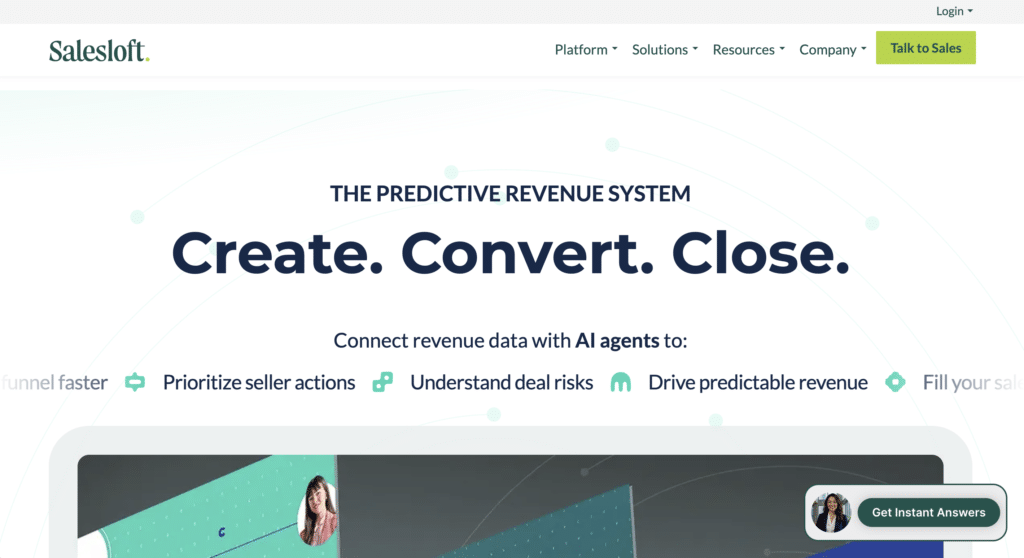
Salesloft is an AI-powered sales engagement and revenue platform. It’s a key player in the sales enablement market and a great all-around tool for most sales tasks. Features include:
- Cadence/sequence automation
- Multi-channel outreach (email, phone, LinkedIn, SMS)
- Call recording & intelligence (Conversations)
- Deal management
- Pipeline analytics
- Revenue forecasting (“predictive revenue system”)
Recent mergers and acquisitions: In December 2025, Salesloft merged with Clari.
Best for: Mid-market to enterprise sales teams (20–500+ reps) looking for a full-stack revenue platform. Great for companies that use Salesforce or HubSpot and need native forecasting and automation features.
How Salesloft Works
Sales reps using Salesloft are able to build clear outreach sequences (cadences) using email, phone, LinkedIn, messaging, and more. Salesloft features Rhythm AI that suggests follow-up actions and is able to coach agents.
Pricing
Custom pricing. Third-party data shows plans ranging from $70/user/month to $200+/user/month. However, these estimates may have been disrupted by the recent merger.
Integrations
Key Salesloft integrations include: Salesforce, HubSpot, Microsoft Dynamics 365, LinkedIn Sales Navigator, ZoomInfo, Apollo.io, Gong, Slack, Microsoft Teams, Zoom, Google Workspace, Outlook/Gmail, Zapier, and more.
2. Apollo.io
Type: Sales Engagement Platform
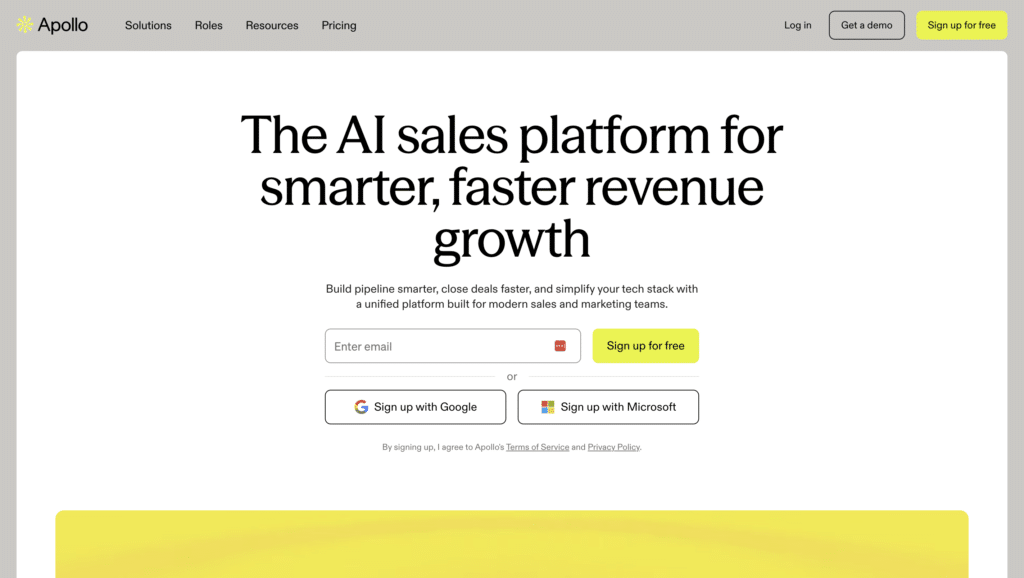
Apollo.io is a combined sales intelligence and engagement platform. Its key advantage is that it serves both outreach and general sales purposes, all neatly packed into a single lean platform. Features include:
- 275M+ B2B contact database
- Email sequencing
- Auto-dialer
- LinkedIn extension
- CRM data enrichment
- AI-enabled prospecting and qualification
Best for: US-based SMBs and mid-market sales teams (between 1-100 reps) looking for a single solution to handle both sales orchestration and outreach with a clear database of B2B contacts already built in.
How Apollo.io Works
Apollo’s database has extensive filtering options, allowing reps to build complex lists, export contacts, and start automated sequences using designated channels: email, phone, etc. Apollo allows users to customize outreach initiatives with AI.
Pricing
Apollo features 4 publicly-listed pricing tiers:
- Free ($0, 900 credits/year)
- Basic ($49/user/month, 30,0000 credits/year)
- Professional ($79/user/month, 48,000 credits/year)
- Organization ($119/user/month, 72,000 credits/year)
Integrations
Key Apollo integrations include: Salesforce, HubSpot, Outreach, Salesloft, Marketo, SendGrid, LinkedIn, Gmail, Outlook, Zapier, Slack.
3. Seismic
Type: Sales Engagement Platform
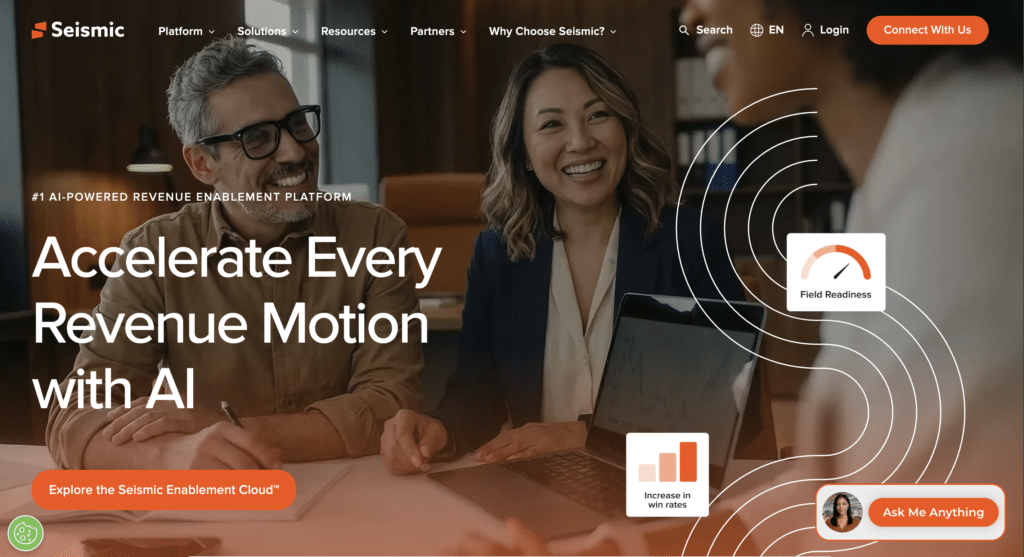
Seismic is a sales enablement platform featuring content management capabilities. Seismic is good for sales teams with extensive content archives and sales collateral, allowing teams to centralize all their docs and enhance content automatically. Features include:
- AI-driven content management
- Buyer engagement tracking
- Learning platform
- Coaching
Best for: enterprises with large Sales teams using extensive content libraries, looking for good AI-assisted content management and personalization with good sales analytics.
Recent mergers and acquisitions: in February 2026, Seismic announced a merger with Highspot.
How Seismic Works
Seismic lets marketing teams add existing branded content straight into the platform. The AI agents automatically recommend the right docs to reps based on deal stages and buyer personas. Using LiveDoc, Seismic automatically updates proposals and sales decks based on your most recent messaging. The LMS part is particularly useful for new reps during onboarding.
Pricing
Custom enterprise pricing with no publicly available tiers. According to third-party data, estimates range from $30/user/month to enterprise contracts of over $10,000 per year. The recent merger may affect these estimates.
Integrations
Key Seismic integrations include: Salesforce, Microsoft Dynamics 365, HubSpot, Microsoft 365 (SharePoint, Teams, Outlook), Google Workspace, Highspot, Marketo, Eloqua, Slack, Zoom, Box, Veeva, and more.
4. Outreach.io
Type: Sales Engagement Platform
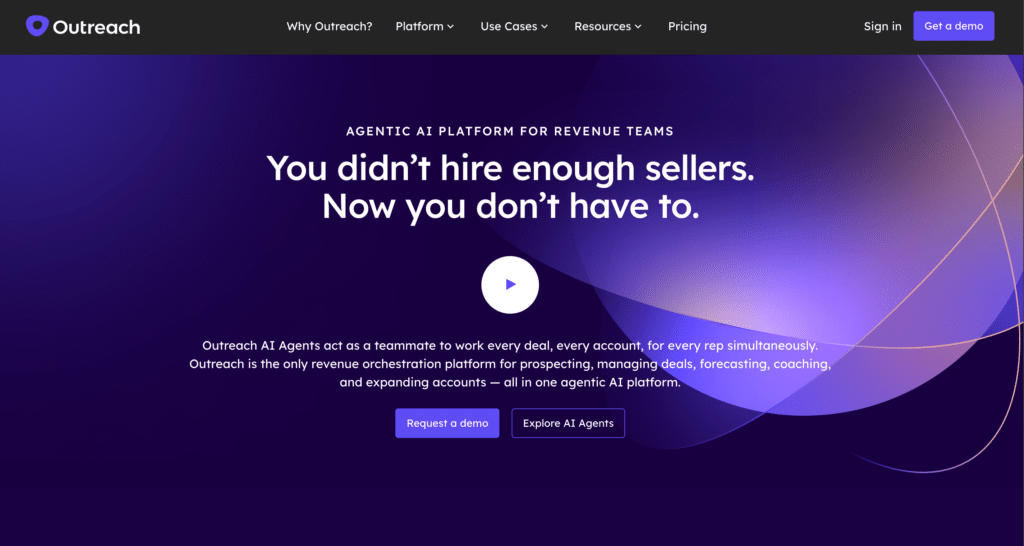
Outreach.io is a very well-known enterprise sales execution platform focused on both outreach sequences and overall sales orchestration. Outreach.io is well-known for its high-end customers, including Adobe, SAP, Zoom, and more. Features include:
- Multi-channel engagement sequences
- Conversation intelligence
- Deal management
- Pipeline forecasting
- AI Agents
Best for: enterprise and mid-market B2B sales teams with clear, structured outbound sales programs operating at high volume within popular CRMs such as Salesforce.
How Outreach.io Works
Sales reps using Outreach.io can easily build automated, extensive sequences across multiple sales channels (email, phone, LinkedIn, SMS, etc.). Outreach.io features advanced AI agents, which can conduct outreach campaigns, prep meetings, draft replies, increase rep productivity, conduct research, build pipelines, and provide updates on current deals.
Pricing
Custom quotes with no public information available. Estimated third-party price ranges fall between $100/user/month and $200/user/month, with annual contracts mandatory.
Integrations
Key Outreach.io integrations include: Salesforce, HubSpot, Microsoft Dynamics 365, LinkedIn Sales Navigator, ZoomInfo, Gong, Slack, Microsoft Teams, Zoom, Gmail, Outlook, Salesloft, Zapier, and more.
5. Instantly
Type: Sales Engagement Platform
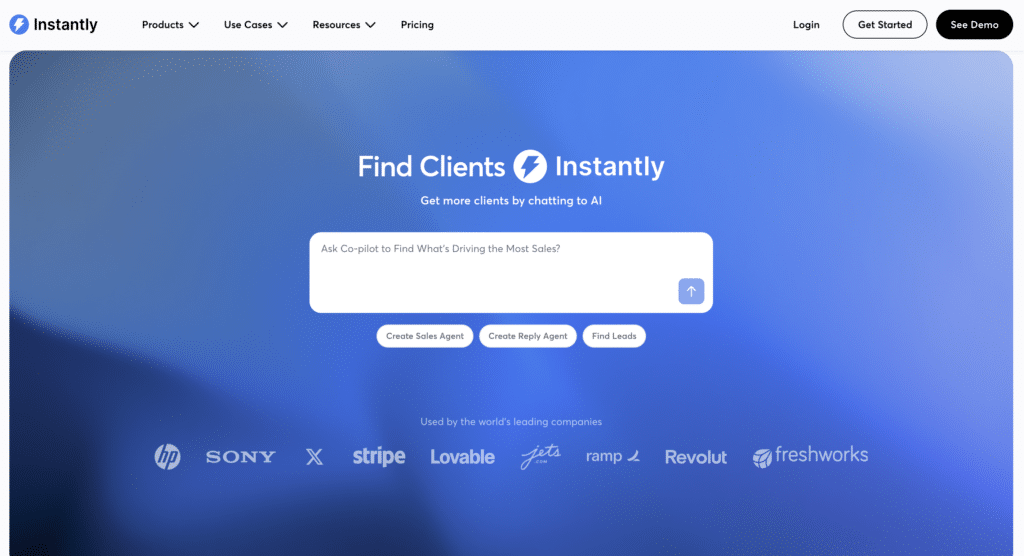
Instantly is a cold outreach emailing platform that stands out due to its unlimited email accounts and built-in unlimited warm-up on all plans. Instantly features include:
- Unlimited email accounts
- Unlimited email warm-up
- B2B Lead database
- Built-in CRM
- AI agents
Best for: sales agencies, solo founders, or lean sales teams with high-volume cold outreach campaigns.
How Instantly Works
Instantly users can connect to an unlimited number of email accounts (with warmed-up domains), building AI-assisted campaigns and copy at scale, and then begin sending out emails. Sales reps can also use the separate Lead Database to browse B2B contacts. Instantly AI agents are able to reply to emails automatically and book meetings.
Pricing
Instantly outreach plans include:
- Growth ($47/month)
- Hypergrowth ($97/month)
- Light Speed ($358/month)
- Enterprise (custom pricing)
Additionally, Instantly offers a leads database and CRM for an added cost. Full-stack plans are available.
Integrations
Key Instantly integrations include: Salesforce, HubSpot, Pipedrive, Close CRM, Slack, Zapier, Make, Gmail, Outlook/Microsoft 365, and major SMTP providers (Google, Microsoft, custom).
6. Skylead
Type: Sales Engagement Platform
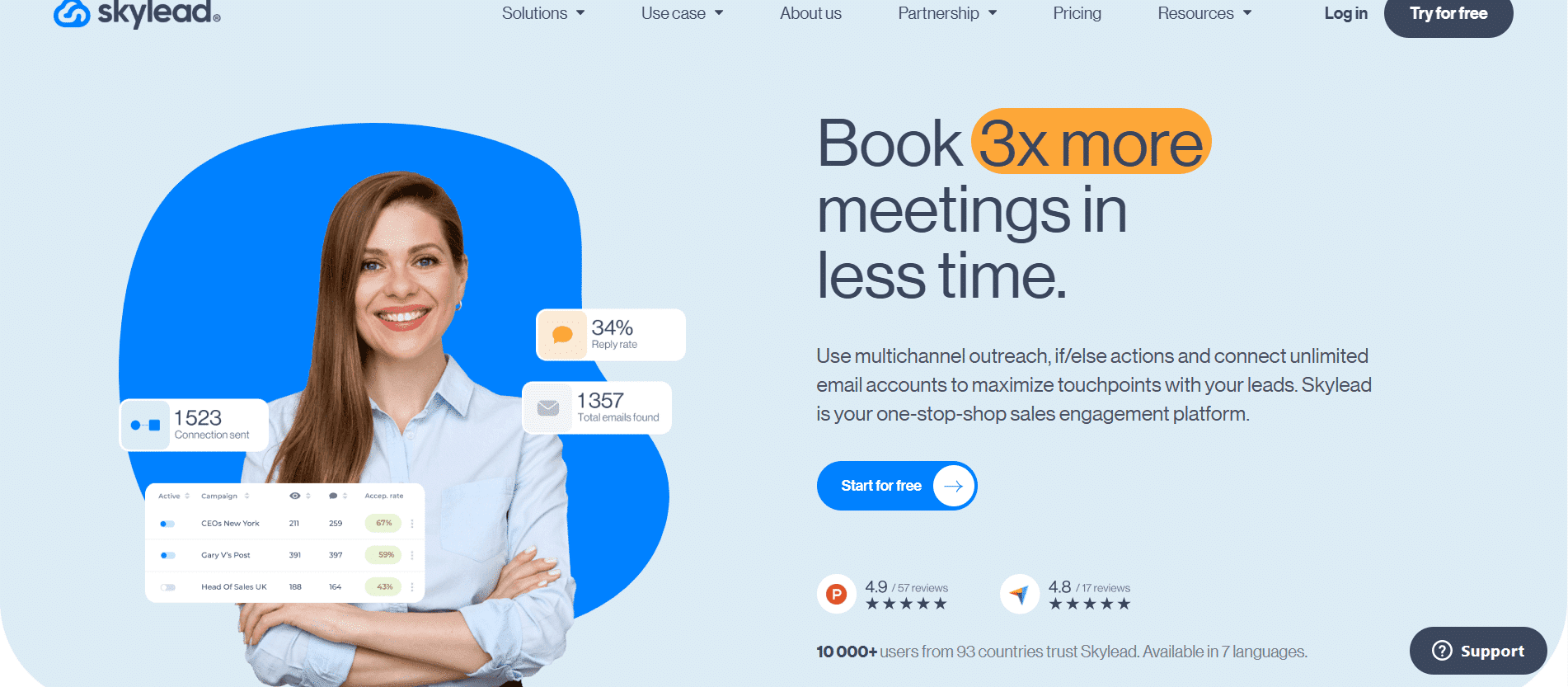
Skylead is a LinkedIn automation and cold email outreach platform built for agencies and sales teams. Unlike most tools in this category, it combines agency-specific flat pricing with an AI SDR that agencies can train on their own sales expertise and deploy across client campaigns.
Features include:
– LinkedIn and email outreach automation sequences
– B2B database and AI data enrichment for zeroing in on ICP
– AI SDR for reply handling and meeting booking
– Custom AI Training Sets
Best for: agencies managing outreach for multiple clients, as well as sales teams that want prospecting, enrichment, multichannel sequences, and AI-assisted reply handling in one platform.
How Skylead Works
Users can find companies and contacts, enrich them using 10+ signals across accounts and contacts, and move qualified prospects into LinkedIn and email sequences. The AI SDR then handles conversations from the first reply through to a booked call. Agencies can refine its responses through feedback-based Training Sets, turning their methodology into reusable intellectual property that clients can use to scale but cannot view, edit, copy, or delete.
Pricing
The all-in-one outreach plan costs $100/user/month, while AI SDR and AI data enrichment cost $1 per 100 credits (up to 95% more cost-effective than comparable tools). Agency pricing is flat at $999 for 50 seats or $1,999 for unlimited seats.
Integrations
Skylead connects with HubSport, Salesforce, and Pipedrive through 3-click integration, or with any other tools through API, Zapier or Make.
7. Salesforge
Type: Sales Engagement Platform
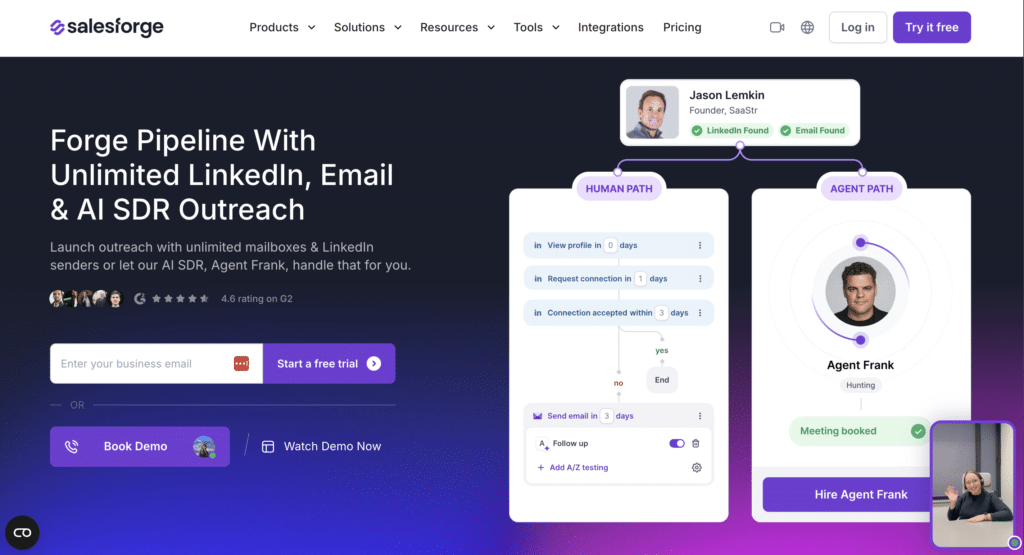
Salesforge is a multi-channel outreach platform designed with unlimited email inboxes and unlimited LinkedIn senders. The key advantage comes from their pricing, which doesn’t adhere to a per-seat basis. Features include:
- AI-powered sequence personalization
- Email deliverability infrastructure
- Advanced AI agents
- AI-based SDR
- Leads search engine
Best for: sales teams and agencies that run high-volume cold outreach campaigns. Recommended for agencies managing multiple client campaigns through various workspaces.
How Salesforge Works
Users are able to connect unlimited email mailboxes and LinkedIn accounts, then build complex, conditional multi-step sequences for both channels. Warmforge automatically warms up all connected mailboxes. Primebox™ consolidates all email and LinkedIn replies into one unified inbox with AI sentiment analysis. Agent Frank then runs fully autonomous outreach: it sources leads via Leadsforge, writes personalised messages, follows up, and books meetings, all done in Auto-Pilot or Co-Pilot mode.
Pricing
Salesforge pricing is publicly listed and includes two regular plans and one AI plan:
- Pro: $48/month
- Growth: $96/month
- Agent Frank (AI SDR): $499/month (annual)
Integrations
Key Salesforge integrations include: HubSpot, Salesforce, GoHighLevel, Pipedrive, Clay, Zapier, Make, n8n, Breakcold, and Persana AI. Also connects via Salesforge API and MCP server. Email infrastructure integrates with any SMTP provider.
8.CloudTalk
Type: Sales Engagement Platform
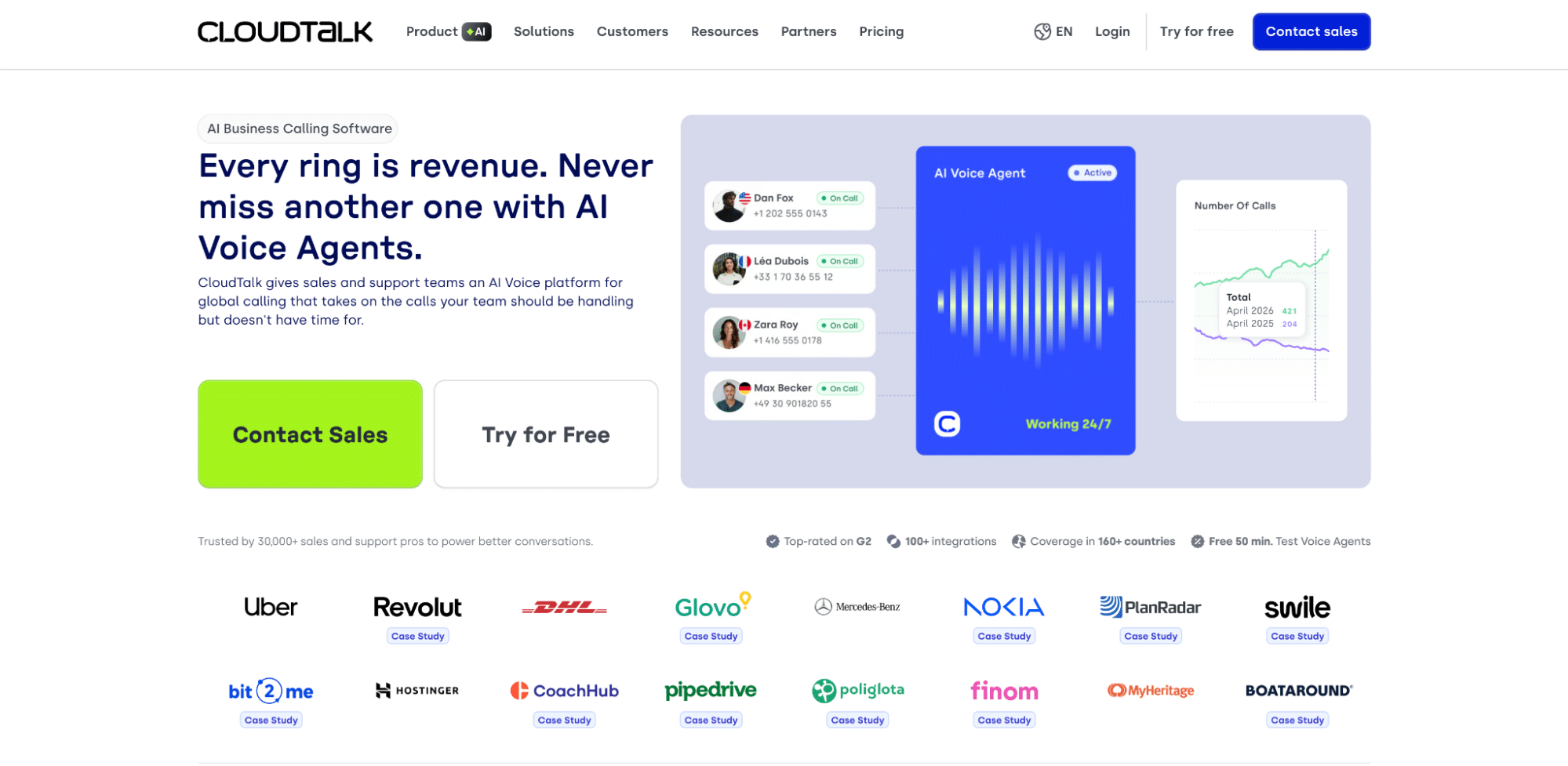
CloudTalk is an AI-powered business calling platform and an AI voice agent solution built for sales teams that run high volumes of inbound and outbound calls. Its strength is turning the phone into a productive, well-documented sales channel, combining dialers and call intelligence in one place. Features include:
- AI Sales Dialer (power, parallel, and preview modes)
- Click-to-call and voicemail drop
- AI call summaries, smart notes, and transcription
- Call scoring and sentiment analysis
- 24/7 AI Voice Agents
- Local numbers in 160+ countries
Best for: SMB and mid-market sales teams that make calling a primary outbound channel and want dialers, call recording, and AI call intelligence integrated with their CRM.
How CloudTalk Works
Sales reps load contact lists and dial through them with CloudTalk’s AI Sales Dialer, using power, parallel, or preview modes to reach more prospects with less idle time. Every call is recorded, transcribed, summarized, and scored automatically, then logged to the CRM, while managers use real-time analytics and call monitoring to coach reps. AI Voice Agents can also handle inbound or outbound calls autonomously in 60+ languages.
Pricing
CloudTalk features publicly listed tiers, billed annually: Starter (25/user/month), Essential (25/user/month), Expert (49/user/month), plus a Custom plan. The AI Voice Agent runs as an add-on starting at $99/month for 200 minutes.
Integrations
Key CloudTalk integrations include: Salesforce, HubSpot, Pipedrive, Zoho CRM, Zendesk, Salesloft, Bullhorn, monday.com, Shopify, Microsoft Teams, and 100+ more.
9. DealHub
Type: Sales Enablement Platform
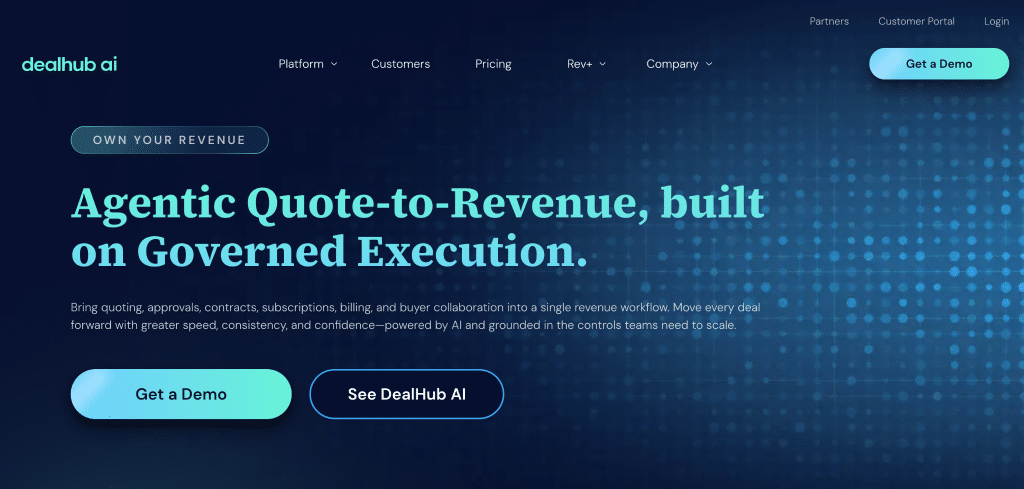
DealHub is a comprehensive revenue enablement platform that unifies AI-powered CPQ (Configure, Price, Quote), contract lifecycle management, and buyer engagement into a streamlined sales workspace. Ideal for high-growth SaaS and enterprise sales teams handling complex pricing logic, it replaces fragmented sales tools to centralize and automate everything from initial quote generation to final signature. Features include:
- AI-powered guided selling and product configuration
- Interactive Digital DealRooms for buyer collaboration
- Automated approval workflows and guardrails
- Contract Lifecycle Management (CLM) with eSignatures
- Subscription and usage-based billing management
Best for: enterprises and mid-market SaaS companies with complex pricing or multi-tier product configurations looking to streamline their deal desk operations and elevate buyer-seller collaboration.
How DealHub Works
DealHub works by taking the guesswork out of the sales cycle through a guided selling interface, ensuring sales reps consistently configure compliant, error-free quotes. Once a quote is configured, DealHub packages it into a personalized Digital DealRoom – a single, secure web page where sales reps and buyers can interact in real time, collaborate on terms, view marketing collateral, and finalize legal redlines. Automated approval workflows run simultaneously in the background, accelerating internal deal desk cycles without delaying customer momentum.
Pricing
Custom enterprise pricing. According to third-party review data, pricing typically scales up significantly based on advanced modules like CLM, billing automation, and enterprise deal-desk requirements.
Integrations
Key DealHub integrations include: Salesforce, Microsoft Dynamics 365, HubSpot CRM, Freshworks CRM, DocuSign, Slack, and various enterprise ERP and billing platforms via its robust API engine.
10. Salesforce Sales Cloud
Type: CRM Platform
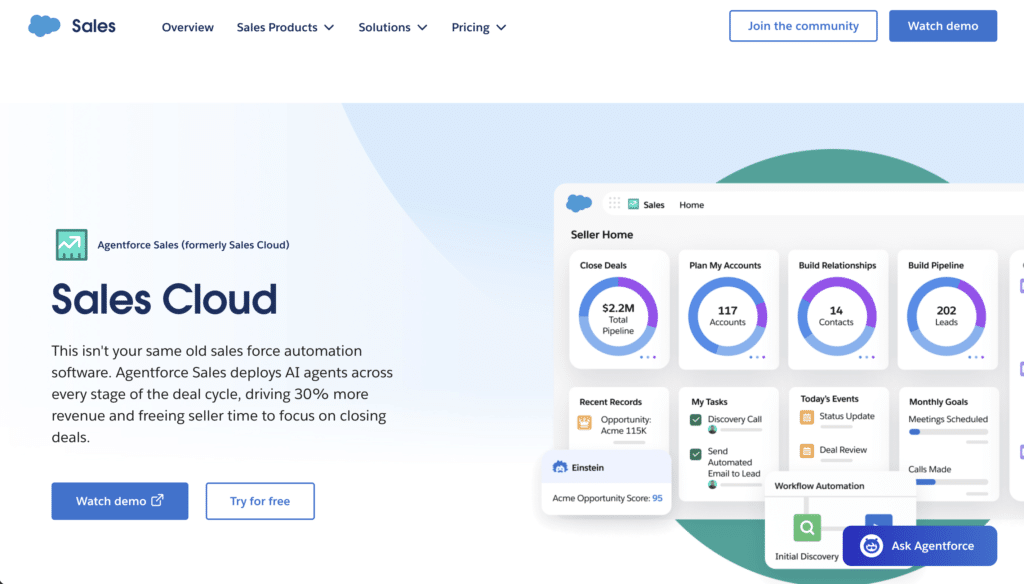
The world’s leading CRM platform, Salesforce Sales Cloud, offers full pipeline management for sales reps across the world. They stand out as the most recognizable name in the industry, though they have come under scrutiny in recent years due to overreliance on AI systems. Salesforce features include:
- End-to-end sales pipeline management
- Lead and opportunity tracking
- Sales forecasting
- AI-powered agents and insights
- Workflow automation
- AppExchange ecosystem
Best for: mid-market and enterprise organizations with highly complex sales motions. Great for companies that can afford dedicated Salesforce admins.
How Salesforce Sales Cloud Works
Salesforce Sales Cloud works by centralizing all leads, contacts, accounts, and opportunities in a single platform. Sales reps can log their activity, check pipeline stages, and see recommended AI actions. Salesforce admins configure sales workflows, automated processes, and AI agents.
Pricing
Salesforce currently features 5 pricing tiers:
- Starter Suite: $25/user/month
- Pro Suite: $100/user/month
- Enterprise: $175/user/month
- Unlimited: $350/user/month
- Agentforce 1 Sales: $550/user/month
Integrations
Key Salesforce integrations are handled through the AppExchange, which includes over 7000 apps, such as Slack, Tableau, MuleSoft, Salesloft, Outreach.io, Zoominfo, LinkedIn Sales Navigator, Gong, DocuSign, Zoom, Microsoft 365, Google Workspace, SAP, Oracle, and more.
11. HubSpot Sales Hub
Type: CRM Platform
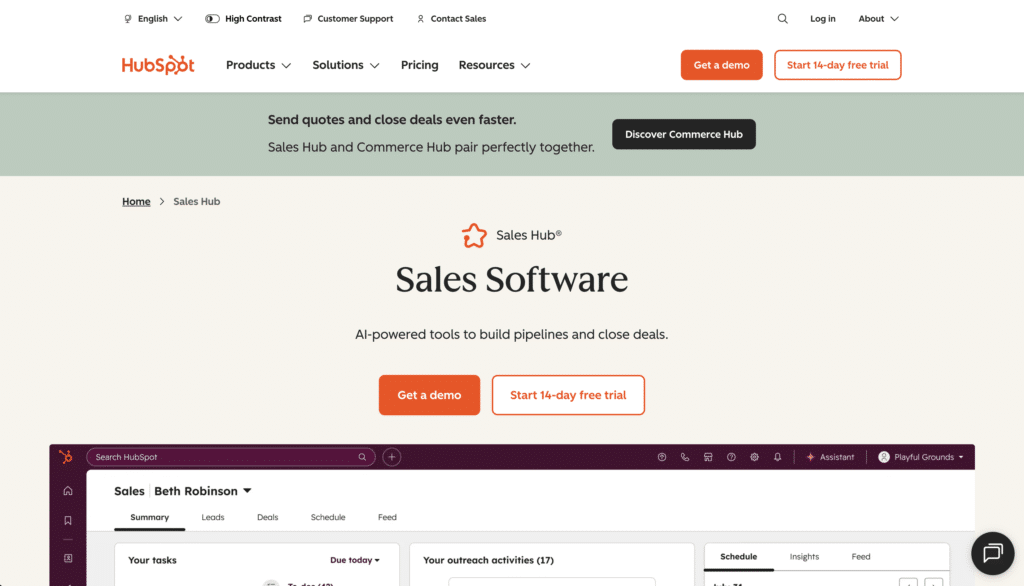
HubSpot’s Sales Hub is a complex sales orchestration module built on top of the base HubSpot CRM. The biggest advantage of HubSpot’s Sales Hub is the ability to leverage the HubSpot ecosystem. Features include:
- Email sequences
- Task automation
- Dialing
- Deal management
- Playbooks
- Forecasting
- Conversation intelligence
- AI prospecting tools
Best for: small and growing businesses, SMBs, or companies already using HubSpot’s CRM in some capacity. Recommended for inbound-focused sales teams.
How HubSpot Sales Hub Works
Sales reps can manage contacts and deals within HubSpot CRM, enrol them into automated sequences, log calls and actions, and receive AI suggestions for next steps and follow-ups. The Sales Hub additionally adds meeting intelligence and scheduling, playbooks, pipeline management, and more advanced sequencing.
Pricing
HubSpot’s Sales Hub features 4 pricing tiers:
- Free CRM: $0 (limited features)
- Starter: $10/user/month
- Professional: $100/user/month + $1,500 onboarding
- Enterprise: $150/user/month + $3,500 onboarding
Integrations
Key HubSpot integrations include: Gmail, Outlook, Slack, Salesforce, Zoom, Stripe, LinkedIn Sales Navigator, ZoomInfo, Apollo.io, Salesloft, Outreach.io, Shopify, WordPress, Intercom, Zapier, and more.
12. Zoho CRM
Type: CRM Platform
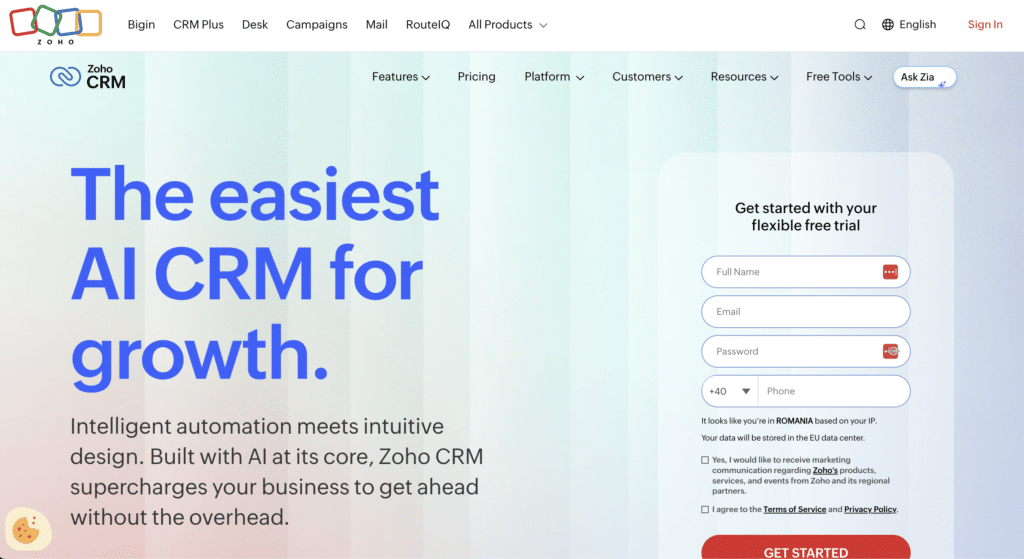
Zoho CRM stands out as an affordable alternative to HubSpot and Salesforce, with features to rival these top CRM platforms. These include:
- Lead management
- Pipeline tracking
- Workflow automation
- AI assistant
- Process automation
- Inventory management
- Territory management
- Advanced sales analytics
Best for: SMBs, startups, and other budget-conscious companies that want enterprise-grade features without the enterprise price tag.
How Zoho CRM Works
Zoho is very strong in capturing leads through its web forms, in this sense rivaling HubSpot’s inbound-focused platform. With its Zia AI, Zoho scores leads, predicts deal closure, and suggests optimal contact times. Sequences (called Cadences) work across channels to automate follow-ups. The inventory module is a great addition for businesses with a retail element.
Pricing
Zoho has 6 pricing tiers:
- Free: $0 (up to 3 users)
- Standard: $14/user/month
- Professional: $23/user/month (most popular for growing teams)
- Enterprise: $40/user/month (Zia AI, custom modules, sandbox)
- Ultimate: $52/user/month
- CRM Plus (full suite): $57/user/month
Integrations
Key Zoho integrations include: Google Workspace, Microsoft 365, Outlook, Gmail, Slack, Zoom, DocuSign, Salesforce, Mailchimp, Zapier, Make, Twilio, and more.
13. Close CRM
Type: CRM Platform
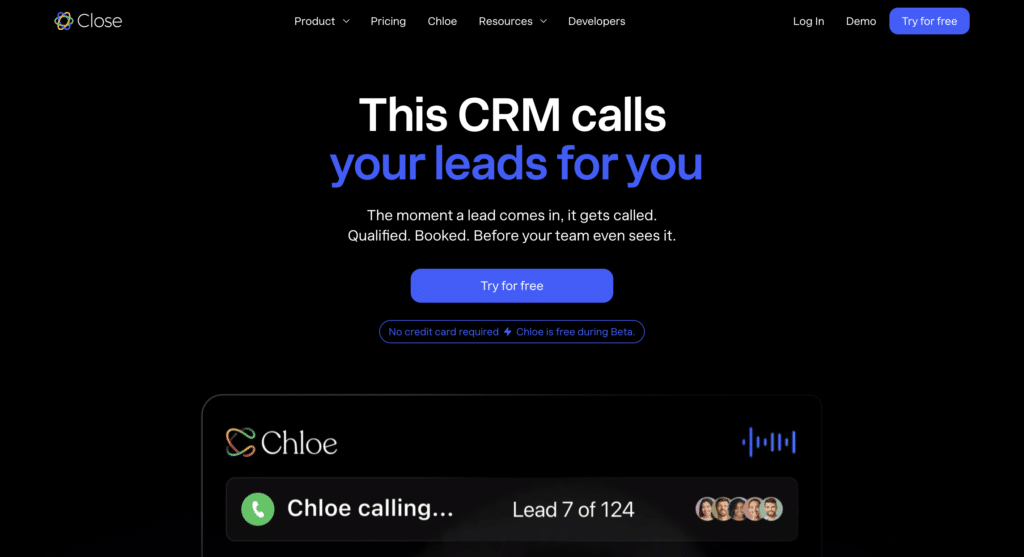
Close CRM is a conversion-focused CRM designed for founders and small Sales teams. Its greatest advantage comes from the lightweight nature of the platform. Features include:
- Built-in calling (VoIP)
- Predictive dialer
- SMS
- Native email ecosystem
- Automated workflows
- AI sales agent
Best for: startups and small-to-medium sales teams with high-volume workflows, particularly focused on calls, texting, and email.
How Close CRM Works
Close CRM functions mostly as a single platform for managing all sales communications from calls to emails, texts, and more, all within the CRM without the need for additional contact software.
Pricing
Close CRM pricing currently features 4 tiers:
- Solo: $19/user/month
- Essentials: $49/user/month
- Growth: $109/user/month
- Scale: $149/user/month
Important note: calling minutes are billed separately.
Integrations
Key Close CRM integrations include: Zapier, Make, Zoom, Slack, Intercom, Segment, Typeform, Gmail, Outlook, Google Calendar, Twilio, Mailchimp, Calendly, and more.
14. Freshsales
Type: CRM Platform
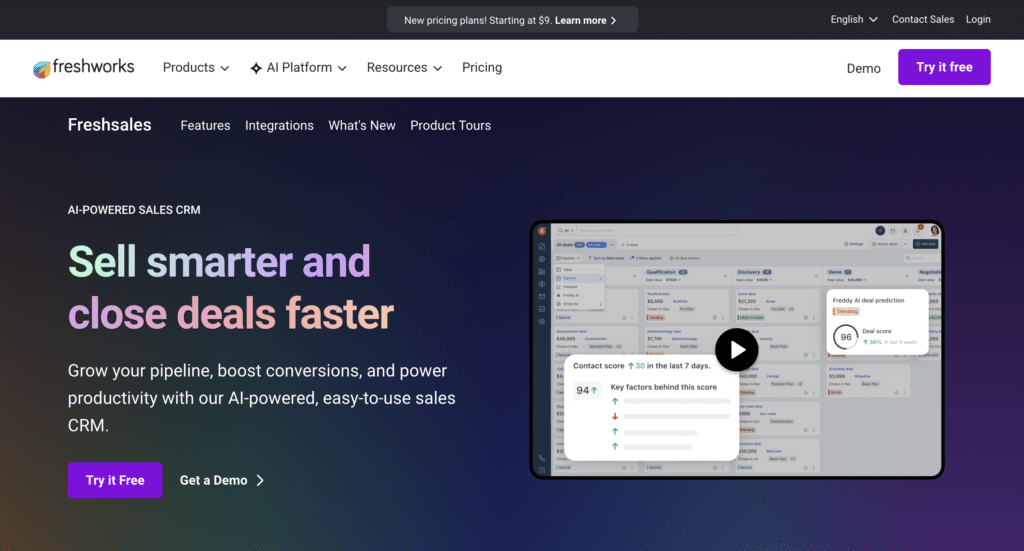
Freshsales is the sales CRM offering advanced pipeline management as part of the broader Freshworks suite of tools. Features include:
- AI lead scoring
- Built-in phone dialer and chat
- Multi-pipeline management
- Email campaigns
- Workflow automation
- Marketing automation
Best for: SMBs and growing teams looking for an affordable CRM platform with an extensive set of features and AI integration. Recommended for those who already use Freshdesk.
How Freshsales Works
The Freshsales platform captures leads using AI and scores them, allowing Sales reps to manage and close deals across visual pipelines and communicate with prospects through the built-in phone, chat, or email features. Freshsales enables reps to automate follow-ups, sequences, and entire workflows, all while receiving real-time insights and health scores from the integrated Freddy AI.
Pricing
Freshsales features 3 pricing tiers as well as a free tier for up to 3 users. The paid plans are:
- Growth: $11/user/month
- Pro: $47/user/month
- Enterprise: $71/user/month
Integrations
Key Freshsales integrations include: Freshdesk, Freshservice, Freshmaker, Salesforce, HubSpot, Slack, Zoom, Google Workspace, Microsoft 365, Outlook, Gmail, Zapier, DocuSign, QuickBooks, Shopify, LinkedIn, Mailchimp, and more.
15. LinkedIn Sales Navigator
Type: Sales Intelligence Tool
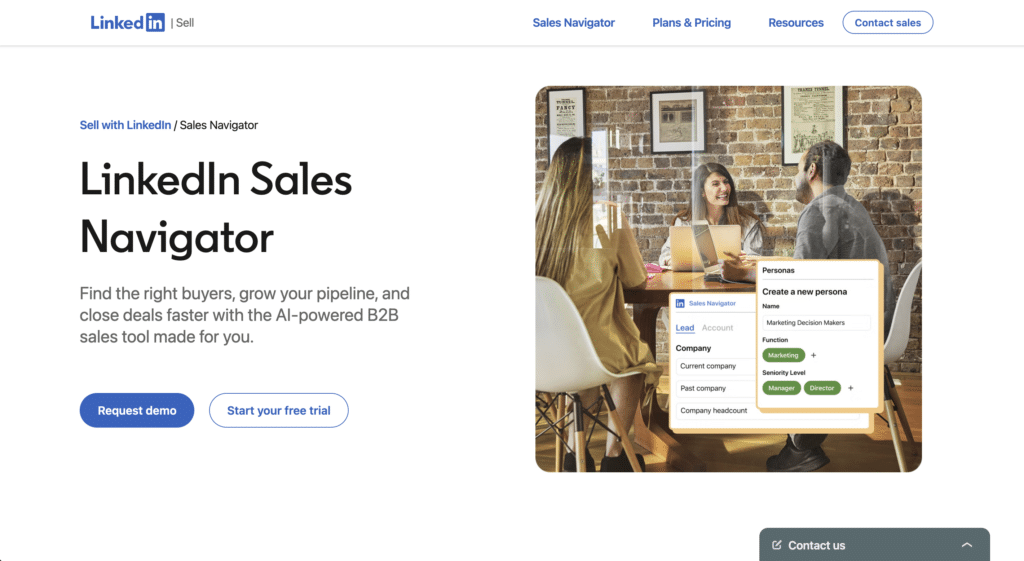
LinkedIn Sales Navigator is a powerful lead prospecting tool that gives Sales reps access to LinkedIn’s extensive database of over 1 billion professional profiles. While the tool is somewhat limiting in its filtering and export options, its database is a gold mine for sales professionals everywhere. Features include:
- Premium prospecting
- Advanced search options
- Complex filtering
- Buyer intent signals
- LinedIn InMail
- CRM integration
- Account tracking
- Connection mapping
Best for: B2B sales teams and reps that primarily sell to prospects who have a LinkedIn presence, including decision-makers and industry leaders.
How LinkedIn Sales Navigator Works
LinkedIn’s Sales Navigator allows users to browse the social network’s extensive database using filters like seniority, company size, tenure, growth signals, industry, vertical, title, and more. Sales reps filter the results as much as possible, then manually sift through the generated list, saving all relevant leads into lists for engagement via InMail. Advanced plans also include CRM sync.
Pricing
LinkedIn Sales Navigator has three pricing tiers:
- Core: $99.99/user/month
- Advanced: $149-159.99/user/month
- Advanced Plus: custom pricing (estimated at $1,600/user/year)
Integrations
Key LinkedIn Sales Navigator integrations are mostly available on the Advanced plans and include: Salesforce, HubSpot, Microsoft 365, Outreach.io, Apollo.io, ZoomInfo, Seismic, Gong, SNAP API.
16. Zoominfo
Type: Sales Intelligence Tool
Zoominfo is a B2B contact and company intelligence platform, with a database of over 260M+ contacts. As a lead prospecting tool, it has better filtering capabilities and a more advanced database, at the cost of a smaller database. Features include:
- Contact database
- Buyer intent data
- Technographic signals
- Visitor identification
- Conversion intelligence
- Engagement layer
Best for: enterprises and large mid-market B2B sales teams with significant budgets allocated for prospecting, targeting clients in the North American B2B market
How Zoominfo Works
Sales teams are able to search Zoominfo’s database using advanced filters and build targeted lists. Pulling names from a database is the easy part while generating B2B leads that actually fit your market is where most of the work goes. Zoominfo pricing works based on credits, and each lead exported equals one credit, thereby allowing Reps to browse and build lists as much as they want before exporting. Additionally, Zoominfo provides buyer intent data, determines website visitors, analyzes call recordings, and enriches CRM records automatically.
Pricing
Custom pricing, each tier includes a bulk amount of credits. Third-party platforms estimate pricing as falling between $14,995/year and $45,000+/year.
Integrations
Key Zoominfo integrations include: Salesforce, HubSpot, Microsoft 365, Outreach.io, Salesloft, Marketo, Eloqua, Slack, Microsoft Teams, Zoom, LinkedIn Sales Navigator, and more.
17. Gong.io
Type: Sales Intelligence Tool
Gong is a revenue intelligence and conversation analytics platform. It records, transcribes, and analyzes all sales calls using AI to provide insights, surface deal risks, coach reps, and forecast signals. Features include:
- Call recording and transcription
- AI sales call analysis
- Email analysis
- Coaching opportunities
- Forecast signals
Best for: Mid-market and enterprise sales teams running high-volume workflows, specifically via video and phone calls.
How Gong.io Works
Gong integrates directly with whatever calling and video meeting tools Sales teams use, including phone dialers. The platform automatically records and transcribes all calls. AI agents analyze talk time, questions, competitor mentions, and any specific engagement signals. Sales managers can receive scorecards and coaching recommendations for their agents. Gong uses forecasting to predict pipeline outcomes.
Pricing
Gong offers custom pricing, and there is little information about their model online, as each potential customer must complete a survey and thus receives custom pricing.
Integrations
Key Gong integrations include: HubSpot, Salesforce, Microsoft 365, Outreach.io, Salesloft, Zoom, Microsoft Teams, Google Meet, LinkedIn, Slack, and more.
18. Hunter.io
Type: Sales Intelligence Tool
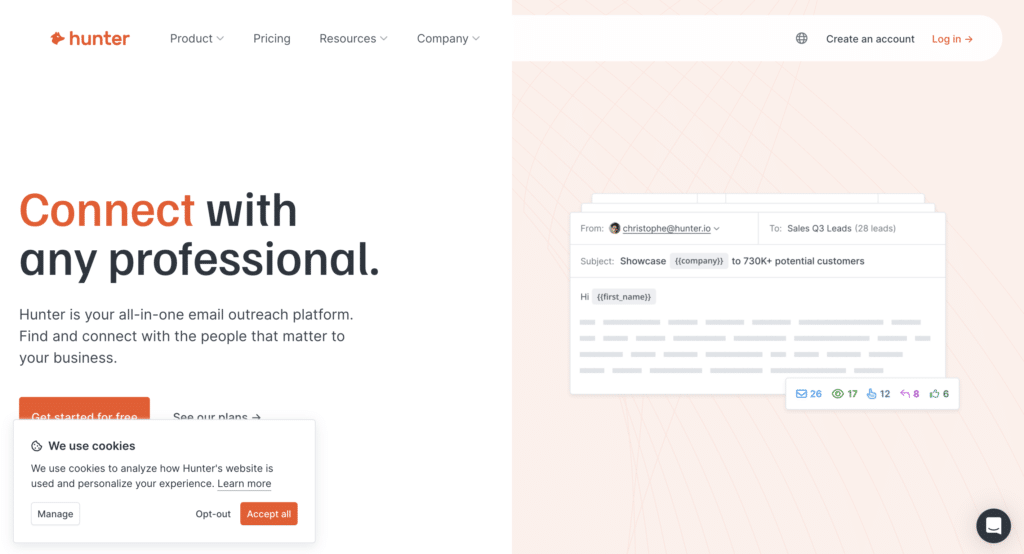
Hunter.io is a very popular email-finding and verification platform that can assist Sales reps in finding contact information about a company faster and more precisely. Features include:
- Domain search
- Individual email finder
- Bulk email verification
- Cold email sequencing
- Lead enrichment and discovery
Best for: independent sales reps, founders, marketers, or small teams doing any sort of outbound activity and in need of reliable contact information about their prospects.
How Hunter.io Works
In Hunter.io, users simply search for the domain of the company for which they want contact information. Alternatively, they can look for specific people or use the bulk search option. Each of these actions consumes credits.
Pricing
Hunter.io uses credit-based pricing and offers a free tier for small users or those just starting out:
- Free: $0, 50 credits/month
- Starter $49/month, 2,000 credits
- Growth: $149/month, 10,000 credits
- Scale: $299/month, 25,000 credits
- Enterprise: custom pricing
Integrations
Key Hunter.io integrations include: HubSpot, Salesforce, Pipedrive, Zoho CRM, Copper, Gmail, Outlook, Google Sheets, Zapier, Make, LinkedIn + API
19. Leadfeeder
Type: Sales Intelligence Tool
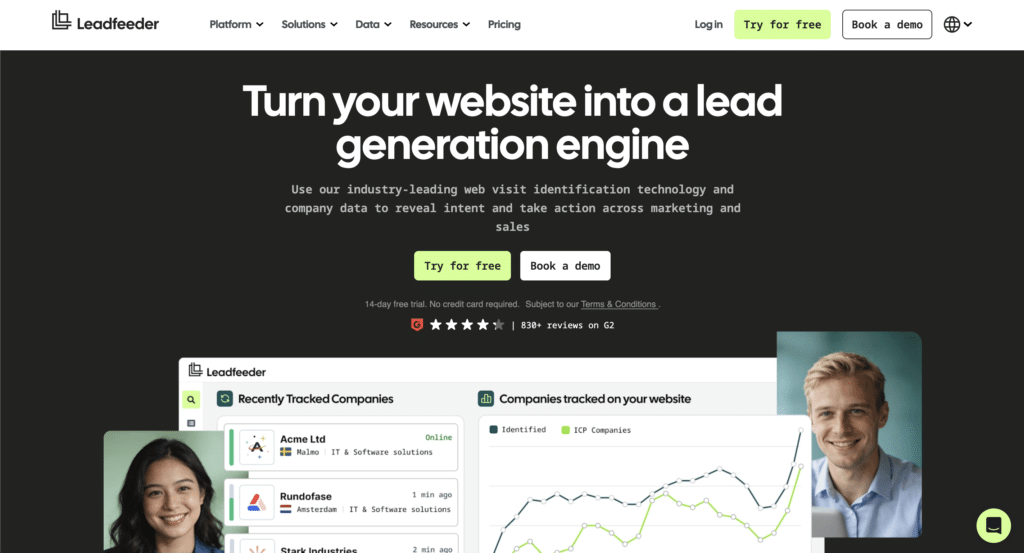
Leadfeeder is a website visitor identification tool that reveals companies visiting your professional web page. Features include:
- Page visitors
- Time on site
- CRM-matched context
- Sales prioritization
Best for: B2B sales and marketers for any organization size
How Leadfeeder Works
Leadfeeder uses a JavaScript tracking snippet on your website to track activity and match visitor IPs with a proprietary database of IPs and companies. This helps Leadfeeder reveal which companies visited your website (not the individuals themselves).
Pricing
Leadfeeder offers two simple tiers:
- Free: $0
- Paid: $165, scaling with volume
Integrations
Key Leadfeeder integrations include: Salesforce, HubSpot, Pipedrive, Microsoft 365, Zoho CRM, Slack, LinkedIn Sales Navigator, Google Analytics, Mailchimp, ActiveCampaign, Zapier, and more.
20. Linked Helper
Type: Sales Engagement Platform
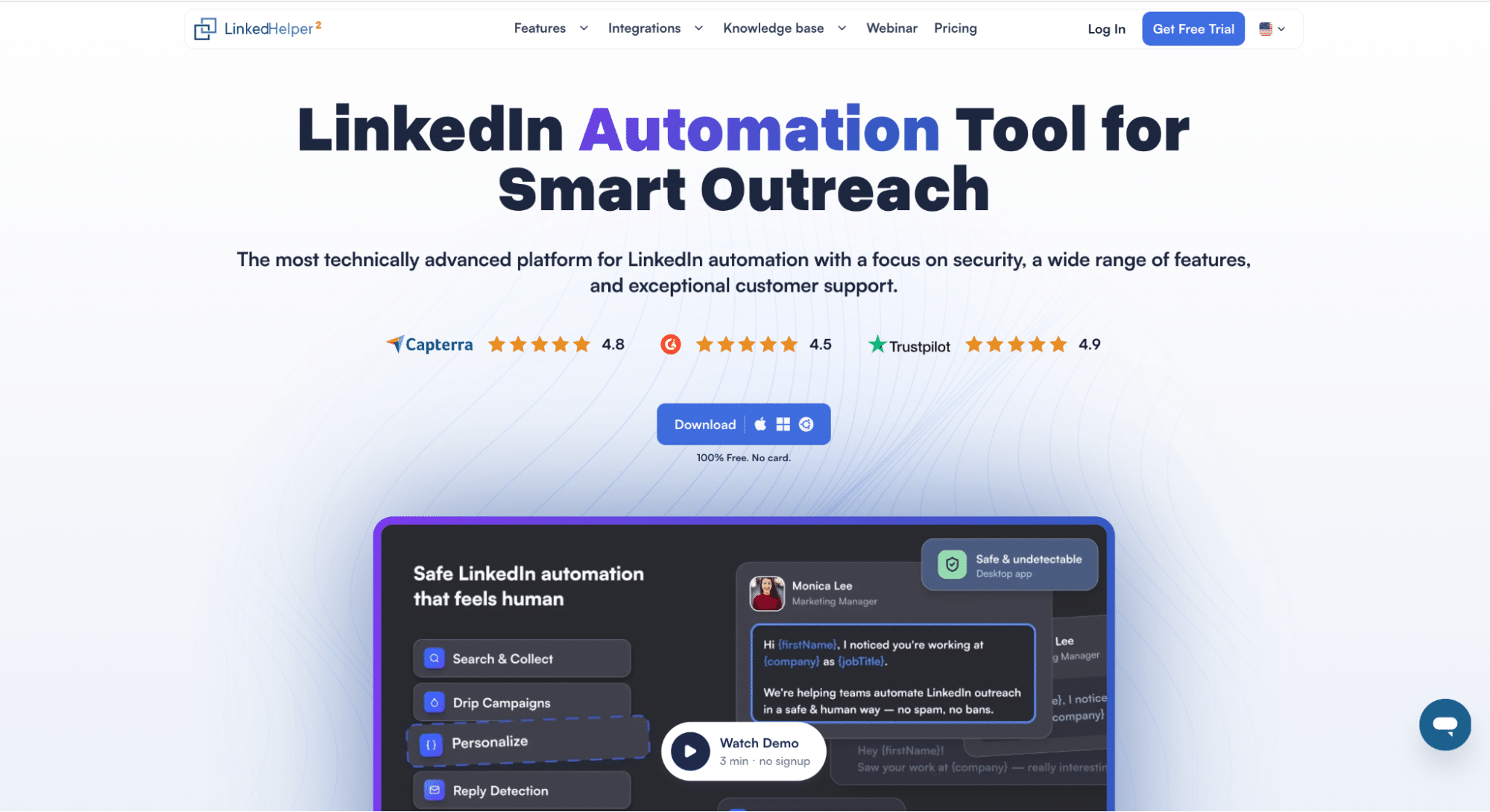
Linked Helper is a LinkedIn automation platform that runs as an app on your own machine, prioritizing account safety over the shared-cloud model most competitors use. Because it acts through its own browser and your own IP, your outreach looks like ordinary human activity rather than server traffic that LinkedIn tends to flag.
Features include:
- LinkedIn outreach and message sequencing
- Built-in CRM and smart inbox
- Email finder and full profile and company data extraction
- AI message writer, AI comments, and AI ICP detection
- Event, group, and company-page automation
Best for: agencies and lead-gen teams managing multiple LinkedIn accounts that need a broad toolkit at a low per-seat cost, plus anyone who ranks account safety as their top priority.
How Linked Helper Works
Users pull leads from Sales Navigator, groups, posts, or CSV files, then move them into automated campaigns that mimic real human actions across the day. As replies come in, the smart inbox pauses sequences and centralizes conversations, while extracted profile and company data syncs to your CRM. It can also run from your own IP with per-account proxies, avoiding the datacenter proxies that trigger LinkedIn warnings.
Pricing
Linked Helper offers two publicly listed plans plus a free trial:
- Trial: Free for 14 days
- Standard: $8.25–$15/user/month
- Pro: $24.75–$45/user/month
- Annual billing significantly lowers the monthly rate.
Integrations
Key Linked Helper integrations include: HubSpot, Salesforce, Pipedrive, Zoho CRM, Google Sheets, Zapier, Make, n8n, plus webhooks and API.
Notable Mention: Loom
Type: Sales Engagement Platform
Loom is a video messaging tool used by Sales teams to send quick, personalized, product-forward video messages to their prospects. Features include:
- Quick screen and camera recording
- Personalized messaging
- Timestamps and video summaries
- Viewer analytics
- AI content generation
Best for: sales reps, account executives, customer success managers, and anyone who regularly records product videos for their prospects, customers, or for internal use.
How Loom Works
Loom allows users to quickly record short videos featuring their screen and webcam through the browser extension, then quickly share a link with prospects. Users then get access to viewer analytics showing who watched the video, for how long, and which areas of the video they paid most attention to. On higher plans, Loom auto-generates titles, video summaries, and cleans up the videos.
Pricing
Loom features 4 pricing tiers:
- Starter: $0
- Business: $15/user/month
- Business + AI: $20/user/month
- Enterprise: custom pricing
Integrations
Key Loom integrations include: Slack, Microsoft Teams, Gmail, Outlook, Notion, Jira, Confluence, HubSpot, Salesforce, Zoom, Google Meet, Intercom, the Atlassian ecosystem, and more.
Will AI replace Sales Enablement?
Based on the research conducted to build this list, it’s fair to say that AI will not replace sales enablement. While many sales enablement processes can be automated with platforms such as Claude Code, the core functions of these platforms are well beyond the reach of AI tools. Features such as email sequencing, dialing, and workflow automation are essential to the sales function and cannot be easily automated using AI solutions.
However, AI can replace content generation, email drafting, task management, and more tasks within the typical sales workflow. The majority of the tools on this list now feature AI that can enhance sales work in these areas. It’s safe to assume that such automation will only evolve and be more embedded within these solutions.
Summing Up
Sales and Customer Success are natural motions within a SaaS company, and as such, work together on several levels, from using churn data in sales prospecting to reengaging churned clients based on CS input.
Custify integrates directly with many of the sales enablement tools on this list and with all of the CRMs, allowing CSMs and Sales reps to work in lockstep towards the ultimate goal of securing new deals and fulfilling customer goals.
If you’d like to see how a CSP can help grow the efficiency of your Sales and CS teams, schedule a quick 15-minute call, and our team will walk you through the process.