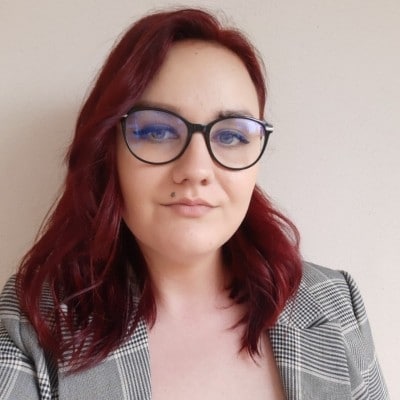
In this episode of Mastering CS: Candid Leader Insights, Irina Cismas sits down with Daniela Shikova, Manager Customer Success at TrialHub, a platform helping pharma and CRO teams plan smarter clinical trials.
Daniela shares how her background in patient advocacy and EU policy shaped her approach to customer success, and why working in one of the most regulated industries in the world demands a different kind of trust, patience, and listening.
She explains how TrialHub measures success beyond renewals, why jobs-to-be-done interviews are central to their CS practice, how they balance client feedback against product vision, and what it really takes to scale from a one-person CS function to a team.
What You’ll Learn
- How a background in patient organizations and EU policy translates into customer success in clinical research
- What customer success looks like in one of the most regulated industries in the world
- Why TrialHub tracks jobs-to-be-done interviews and value stories as core CS metrics
- How to build long-term trust with enterprise pharma clients as a small Eastern European startup
- How to translate client feedback into product improvements without overcomplicating the roadmap
- What changes when you move from being a solo CSM to managing a CS team
Key Insights & Takeaways
Domain expertise builds credibility. Understanding the clinical trial landscape — not just the software — is what earns trust with highly regulated, complex enterprise clients.
Jobs-to-be-done interviews drive product alignment. Speaking to both users and decision makers helps TrialHub prioritize features that matter across the board, not just for one client.
Value stories are a CS asset. Collecting and sharing how different personas use the product helps both internal teams and clients see possibilities they hadn’t considered.
Trust takes longer in regulated industries. Long sales cycles, complex org structures, and constant vendor competition mean relationship-building is a long game.
User feedback must be verified up the chain. What users request and where senior leadership is taking the company can be very different — both conversations are essential.
Managing a CS team requires a different skill set. Moving from CSM to CS manager means learning to delegate accountability, not just tasks, and having honest conversations early.
Podcast transcript
Intro
Irina (0:06 – 0:50)
Welcome to Mastering CS Candid Leader Insights, the podcast where we dive into the world of customer success with industry leaders. I’m your host, Irina Cismas, and today I’m joined by Daniela Shikova, Manager Customer Success at TrialHub, a platform helping pharma and CRO teams plan smarter clinical trials. Daniela, I’m really happy to have you here.
You didn’t start in SaaS. You started in patient organizations and even worked with EU policy structures. How did that journey lead into customer success in clinical research?
From Patient Advocacy to Clinical Research Tech
Daniela (0:52 – 6:45)
It’s quite a journey. I graduated in Economics and Financial Management, which is a very different field from what I’m doing now. But I’ve always been someone who wants to help people and have a real impact on the world.
The work in patient organizations happened very accidentally. I came back from a summer work experience in the States and found a job offer through a friend. I fell in love with the mission of helping patients organize awareness campaigns for disease screening or accessing new treatments. We started working with European structures like the European Patients Forum, the European Commission, and the European Parliament, so my work was partially policy-focused. But at some point, I didn’t feel I had enough impact. With policy, you can feel the results much later, if at all. The burnout and stress also overwhelmed me, and I decided I wanted something bigger, but my passion for healthcare and helping patients stayed with me.
I came across a startup helping passengers claim reimbursements for delayed flights and applied, but the CEO called to say the position was filled. She loved my application though and referred me to another startup called FindMeCure. They didn’t have a role at the time, but they created one for me based on my background with patient organizations. The idea was to partner with patient advocacy groups to spread the word about clinical trials globally, because clinical trials are a treatment option. They give patients access to innovative treatments that might otherwise not reach the market for another ten years.
I knew nothing about startups. I came from the NGO sector and had no idea what terms like scrum, KPIs, or OKRs meant. I started from scratch, but I loved the work, helping patients and caregivers find clinical trials through our search portal.
A few years later, after my maternity leave, the company had launched a new product called TrialHub, focused on the industry side, working with pharma companies and clinical research organizations who design and conduct clinical trials. My co-founder told me I would be the best person to lead customer success for it. At that point, only the salesperson had been handling client relationships, and they needed a dedicated person. So that’s how I stepped into the role, with no prior CS experience and limited knowledge of the industry side of clinical research. Four years later, I’m now helping to build the customer success team.
Irina (6:45 – 7:37)
That’s what I love about customer success – depending on the industry and the company, it can mean very different things. These conversations are meant to show a bit of what you do and hopefully inspire other CSMs working in the healthcare industry. So I want to ask you: what does customer success mean at TrialHub, and how is it different from any other SaaS company?
What Customer Success Means at TrialHub
Daniela (7:37 – 10:09)
I don’t have experience with other SaaS companies, although I’ve read a lot about best practices and learned from them. There are a lot of similarities, because at the end of the day you’re always speaking to a person, whether it’s a B2B or B2C business. We speak with people who probably didn’t sleep last night, or are navigating kids and life, no matter how senior they are. It took me quite some time to learn this, because I also had concerns when speaking with vice presidents or very senior people. But human interaction is what makes us the same, regardless of industry.
What I can say about the clinical research industry is that it’s one of the most regulated industries out there, close to aviation in terms of regulations.
Complex processes, compliance requirements, and very complicated company structures mean it takes us a lot of time to understand how each organization is built, who reports to who, and what people are actually trying to achieve.
The sales cycle is also very long because it’s not easy to become a vendor of a pharmaceutical company. They are constantly bombarded by different solutions and vendors, and now with AI overwhelming the space, there is always a new innovative solution competing for their attention. So you need to prove that you are different, that you provide real value and can differentiate. We started as a very small startup from Eastern Europe, and now we are competing with the biggest players from the United States. That’s a win.
Irina (10:09 – 10:44)
Definitely. And I know us also operating in Eastern Europe, I know that it’s hard to be able to compete with a native US company, with companies that do have a local footprint there. And I think you need to work twice or even at least twice as hard as other companies to prove your competency, to prove that you deserve a place at the negotiation table.
Daniela (10:45 – 11:05)
And I think this is actually something that helps us just because we come from a smaller country. We also had so many problems on a national level. We are more competitive and we definitely know how to prove our value and to differentiate.
So this made us stronger.
Irina (11:07 – 11:28)
Speaking of proving and showing the value, what are your guys’ main KPIs? Are they on the product adoption? Are they on the renewal metrics, strategic alignment, or maybe even something else entirely that is important for you as an organization?
KPIs and Metrics That Matter in Clinical Research SaaS
Daniela (11:28 – 12:36)
We track renewed customers and churn rate on both a quarterly and yearly basis, and we always project renewal and churn rates to understand how to prevent churn. That’s on top of our agenda, along with ARR.
But we also have some interesting metrics. The marketing team, for example, has started tracking the number of events we attend, where we always organize something, whether it’s a booth, an initiative, or a campaign, and then measure the conversion rate afterwards. They also measure the number of viral posts on LinkedIn and social media.
In customer success specifically, we started tracking something that has really helped us: the number of jobs-to-be-done interviews we conduct with our partners.
Irina (12:36 – 12:58)
Awesome. I think you are one of the few companies that mentioned the jobs-to-be-done interview framework. I have to admit that is very fascinating.
I wouldn’t have expected a company from the healthcare industry to apply this framework, so kudos to the team for doing that.
Daniela (12:58 – 15:49)
It’s important, and I always like to give this example. If you want to produce food for dogs, you can create the best factory in the world with the most innovative technology, and the dogs still wouldn’t eat your food. You need to understand their taste, their preference, what kind of food they like. The same applies to our clients. We need to create a product that really resonates with their needs and priorities.
This is why, as part of our jobs-to-be-done conversations, we want to speak to as many users as possible, but also decision makers, to understand their current workflow, their priorities and needs, how they would imagine their ideal day at work, and what keeps them up at 2 a.m. We want to challenge them with such questions so they can tell us more about what they imagine.
We’ve noticed that people in general want to speak. They are willing to share their struggles, and when they see someone who is willing to listen and ask the right questions, they see that we are not yet another vendor claiming to be the best and most innovative. We really listen and deliver afterwards.
We also started measuring, for the first time this quarter, the number of value stories we collect on a quarterly basis. We know the value of our product, but speaking to so many different personas and teams, we’ve learned that the value is different for each of them. Sometimes we forget that our data can be applied in so many different scenarios and strategies. Collecting these value stories helps us communicate it much better to other clients who haven’t considered using this data for a specific scenario.
And this also helps us to communicate internally. For example, with the marketing team, they need to know how to spread the word about TrialHub and find a cure. And by knowing these value stories from actual users, they can be much more persuasive to the audience.
Irina (15:50 – 16:21)
I really like that the examples you share are innovative, put things in a different perspective, and trigger creativity, basically combining product, marketing, and CS. That’s very interesting. In such a regulated and high stakes industry, how do you build long term trust with enterprise life science clients?
Building Long-Term Trust with Enterprise Life Science Clients
Daniela (16:23 – 18:21)
It has been a difficult journey. We are a small startup from Eastern Europe, with 30 people, competing against companies with thousands of employees.
I also remember our first client, which is actually one of the most successful CROs in the world, and it is still with us today. We sold them TrialHub when it was not even a product yet, just a Google document describing the concept. We always think, how did that happen? How can someone so big and with such a reputation purchase something that hasn’t been built yet?
I think people see our passion and that we really want to create value. We are not yet another vendor talking about how innovative their technology is. We listen, we ask the right questions, and we deliver. We prove to clients that whatever they tell us, if it’s meaningful, we act on it. I’ve had multiple clients say that with TrialHub, they feel their voice is heard, which is not something they are used to with other vendors.
It’s very common in our industry that established vendors feel comfortable with their reputation and their presence across companies. But some of them have five-year roadmaps. And do you know what that means for a client who needs a feature?
Irina (18:21 – 19:21)
Stability, basically. Take it or leave it, this is our solution, with no attention to personalization or trying to solve an edge case. I totally know what you mean. Before speaking with you, I was under the impression that this is how the healthcare industry works, because it’s so regulated.
You can’t serve every edge case or do customer success at the level you see in native SaaS companies.
I’m glad you are different and, if I may say it, you are the disruptor of the industry and the example that even in highly regulated industries, the customer voice can be heard.
Daniela (19:22 – 20:34)
Yep. And I’m very proud to say that at the end of last year we even won one of the most important awards in our industry, the DFARM award for disrupting the industry with our solution.
We have a new product now that we are building about mapping the patient journey, because we truly believe that the old school way of designing clinical trials doesn’t work anymore. What really matters is listening to the patient’s voice and seeing what these patients have access to in terms of treatment in their own country, because every country and every patient journey is different.
You need to create a clinical trial that really fits into their daily life, not the other way around, which is now the case. You build a clinical trial and you expect that the patients will adapt to your design. What we try to achieve in the industry is to reverse the workflow, so that the clinical trial is designed according to the patient’s journey and pathway.
Irina (20:35 – 20:53)
I’m curious, how do you take client feedback and translate it into product improvements without overcomplicating the roadmap or without jeopardizing the product vision? How do you balance this?
Translating Client Feedback into Product Without Derailing the Roadmap
Daniela (20:54 – 23:56)
It’s always tricky because we as customer success people always try to help. We have built very deep relationships with our users, and when we hear that they need a certain feature or something to be improved, we always take it as our mission to do it. But with time, you learn to put some boundaries, because it’s very important to communicate this feedback properly to the product team.
Our goal is to first understand the user better. Why do they need this? In what cases? How often would they use it if we built it? And if we don’t build it, how would they do it and how much time would it take? We try to estimate the value of what they’re requesting and whether it’s something that will help just this client or our clients across the board.
We had an interesting case last year with one of the biggest pharma companies, which is our client. The users requested a whole new module with different data sources, because most of their daily requests were related to this type of data. They persuaded us that this was important for the company and the market in general, as it would automate weeks of manual research. We were almost ready to do it and even discussed hiring a dedicated person for it.
But then we had a conversation with the decision maker of the same company, who told us something totally different. The company had new priorities and would be changing their therapeutic area portfolio completely over the next five years, meaning those data sources would no longer be needed. So it’s really important to speak not only to users, who will tell you their current pain and daily struggles, but also to verify with senior leadership where the company is heading. Otherwise, in a few months or a year, the feature will no longer be needed.
Irina (23:57 – 24:18)
And then you will have the frustration of the team that worked on something, the load on the product, or maybe a bit more misalignment on the product side because of what you developed. And in the end, a lot of work and nobody uses it because it’s no longer a priority.
Daniela (24:19 – 24:38)
At the same time, the product team has established a very sophisticated prioritization framework because we have lots of ideas coming from clients and we need to prioritize. We need to be able to prioritize. Otherwise, it’s getting a big mess.
So we always estimate impact versus effort.
The Hardest Lessons: Churn, Delegation, and Learning to Lead
Irina (24:40 – 24:45)
I’m curious, what’s been one of the hardest moments in your CS career so far?
Daniela (24:46 – 27:08)
Churning clients is always something I suffer for. I used to suffer more because I took it personally, but now we have a process, a pre-mortem and then a post-mortem, analyzing why it happened, how we can prevent it with future clients, what caused it and who is accountable. We learn from our mistakes.
Churn is always a hard moment because you’ve built relationships with the client, you’ve built so many features for them, the users love you, but it’s something external or some restructuring that prevents them from having a budget.
But to be honest, the hardest moment for me was last year when we had to grow the team from just myself to hiring a second person. It’s not easy when you’re used to being a one-man show to start delegating. And I didn’t have a problem with delegating tasks. I gave this new person a lot of tasks and initiatives and she took over a lot of things from day one.
The real issue was that I delegated the tasks but couldn’t delegate the accountability. I realized this through an honest conversation with one of our co-founders. You need to be able to make the other person accountable for those clients and let go. You also need to communicate the hard stuff and see not just the symptoms. Like treating a disease, you need to understand what’s the elephant in the room and what is actually causing it.
At some point I was becoming a micromanager, just because I was very good at being a customer success manager but not yet good at managing people. These are totally different things.
Irina (27:08 – 27:15)
The difference in being a CSM and being the manager of a CSM. Yeah, it’s a totally different skill.
Daniela (27:15 – 28:15)
And you start learning them from scratch. At some point you feel like an underachiever, you don’t feel satisfied, and you have to deal with your clients on top of that. It’s not easy, but we learned a lot from this experience.
The best part is that at FindMeCure we invest a lot in our mental health. The company is not the one giving food vouchers and stuff, they are investing in our mental health. Each month we are allowed to have mental health sessions and to invest in some educational courses.
The other CSM, for example, is also a person working on herself, self-aware, analyzing her behavior and mine. We had very hard conversations, but we managed to get through this hard moment thanks to the honest conversations that we had.
Irina (28:15 – 28:38)
Thank you for the conversation. It was great hearing your perspective on customer success in the clinical research space and how it connects business goals with real human impact. To everyone listening, thanks for tuning in. Until next time, stay curious, keep learning and mastering customer success.